Rudyard Kipling’s classic collection, The Jungle Book, features the brave little mongoose, Rikki-Tikki-Tavi, who famously battles dangerous snakes. It’s easy to think this story is pure fiction — after all, how could such a tiny creature defeat larger, more powerful opponents?
Baboons and Opportunistic Hunting
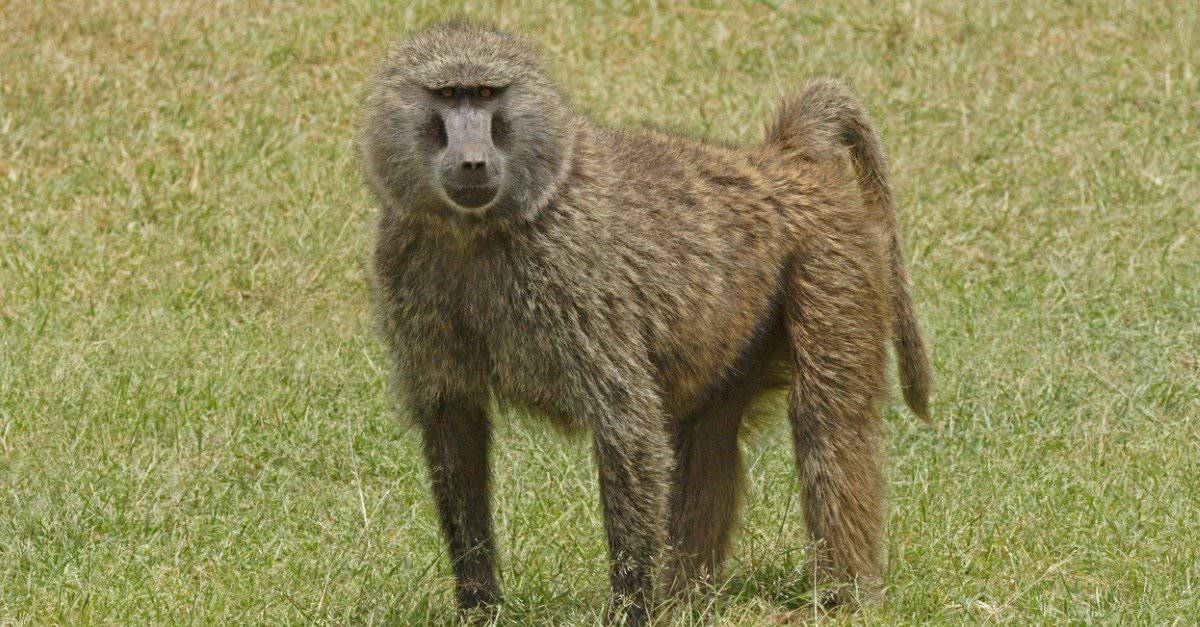
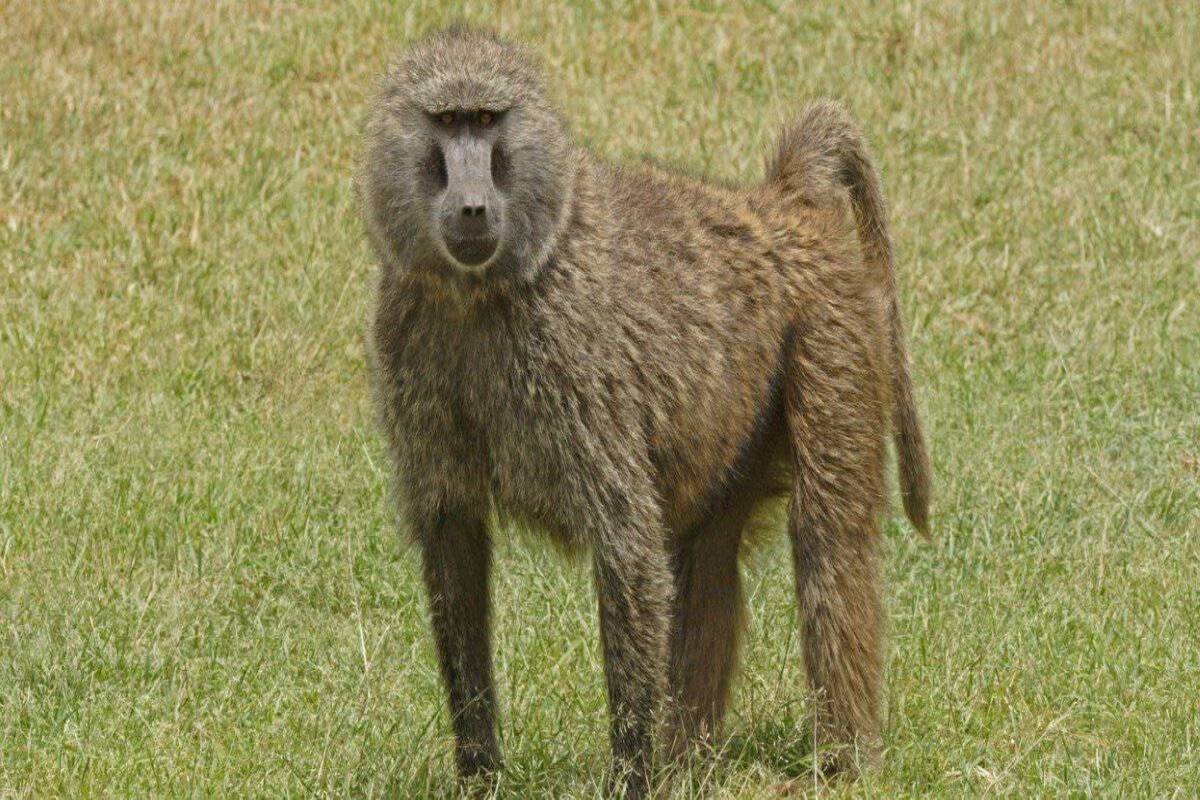
Baboons are among the largest monkeys in the world, typically standing 20 to 47 inches tall and weighing 50 to 100 pounds, depending on the species. In addition to their size, baboons also have sharp teeth and powerful jaws. As social creatures, they live in “troops”
Baboons are opportunistic omnivores, meaning they’ll eat nearly anything they can find. Their diet mainly consists of leaves, bark, grass, roots, blossoms, seeds, and berries. Less frequently, they also eat small animals, such as shellfish, birds, hares, and small mammals.
The Power of a Mongoose Pack
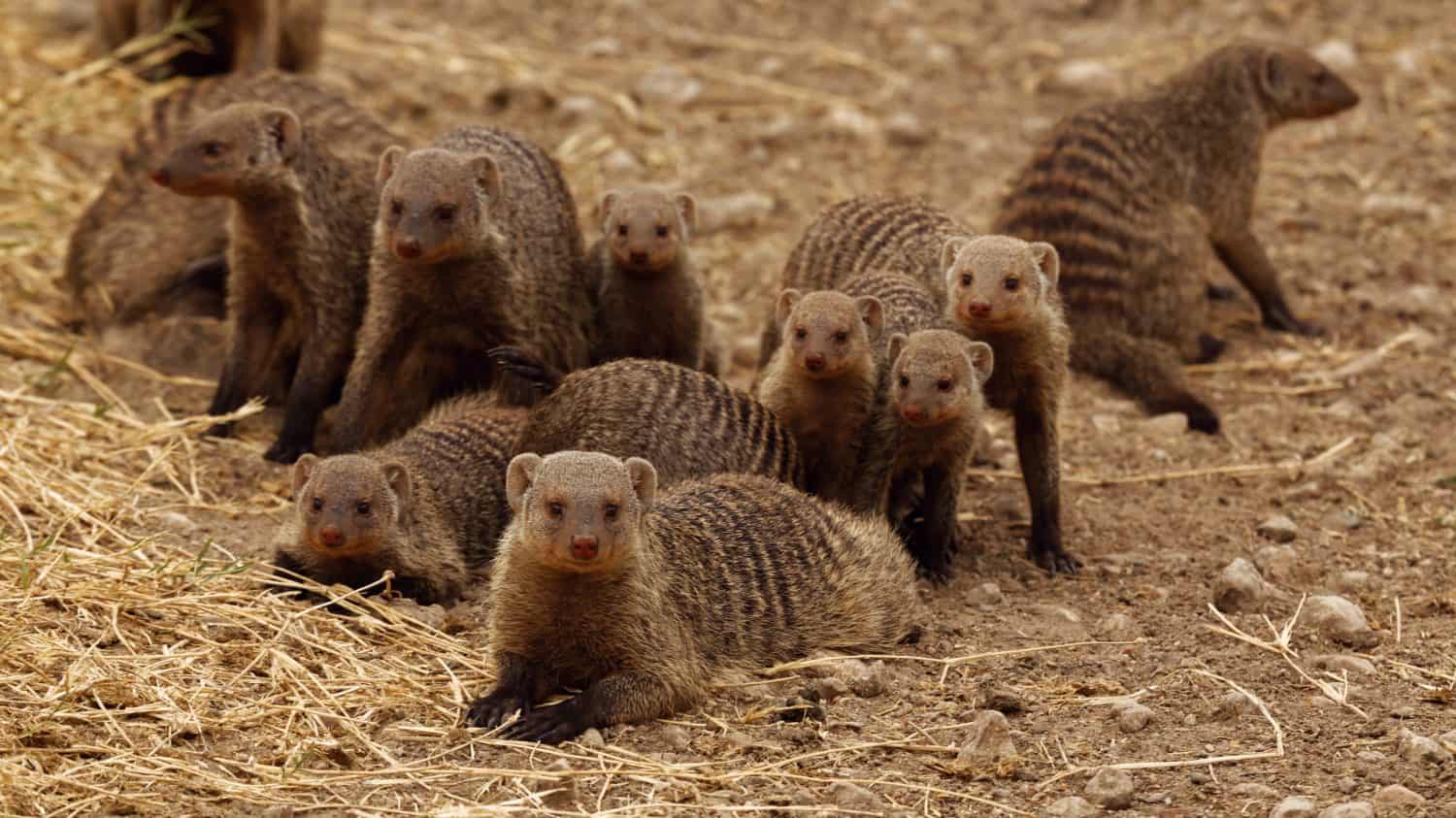
There are dozens of mongoose species, ranging in size from 7 to 24 inches in length. Although they are much smaller than baboons, mongooses should not be underestimated. Many species form cooperative family units and work together to hunt, raise their young, and defend their territory.
Mongooses are incredibly fast and agile, making them hard for any predator to catch. Although bites occasionally happen, these little creatures have acetylcholine receptors — a unique protein that helps their bodies resist even powerful snake venom.
Cooperative mongoose groups fiercely defend their territory and members, often employing a tactic called “mobbing.” As the name suggests, mobbing means the mongooses charge at the threat together in a single group, defending as if they are one unified body. As seen in the YouTube video, the mongooses quickly become a constant, moving storm of teeth and determination. Two of the three baboons quickly give up, but the third stubbornly tries to snatch a baby mongoose.