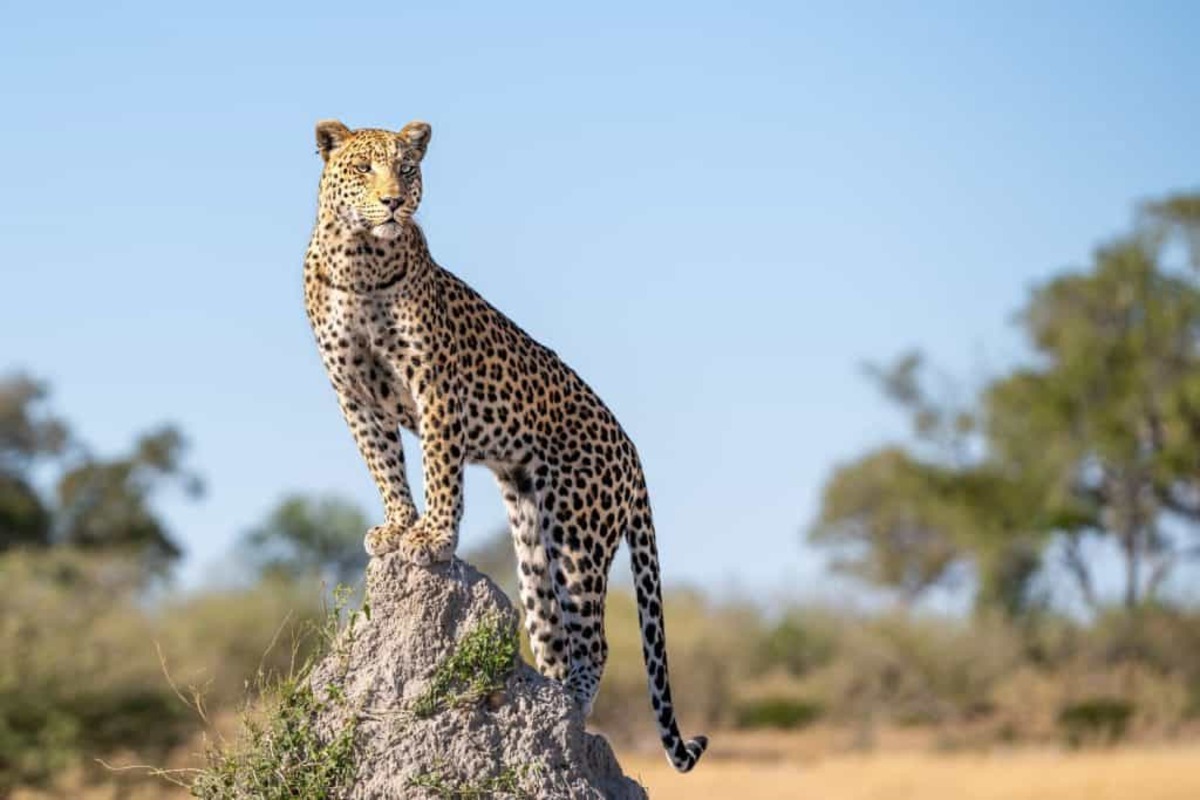
Leopards (Panthera pardus) and jaguars (Panthera onca) are two big cats with lots of spots, and although they look a lot alike, once you pay close enough attention and know what to look for, you’ll be able to tell them apart. There are also a lot of ecological and behavioral differences that separate these two similar-looking species.
Range and Habitat Differences
The easiest way to tell leopards and jaguars apart is by where you are geographically located when you see an animal that looks like a leopard or a jaguar. If you’re in South or Central America, you’ve seen a jaguar, whereas if you’re in Africa or Asia, you’d be looking at a leopard.
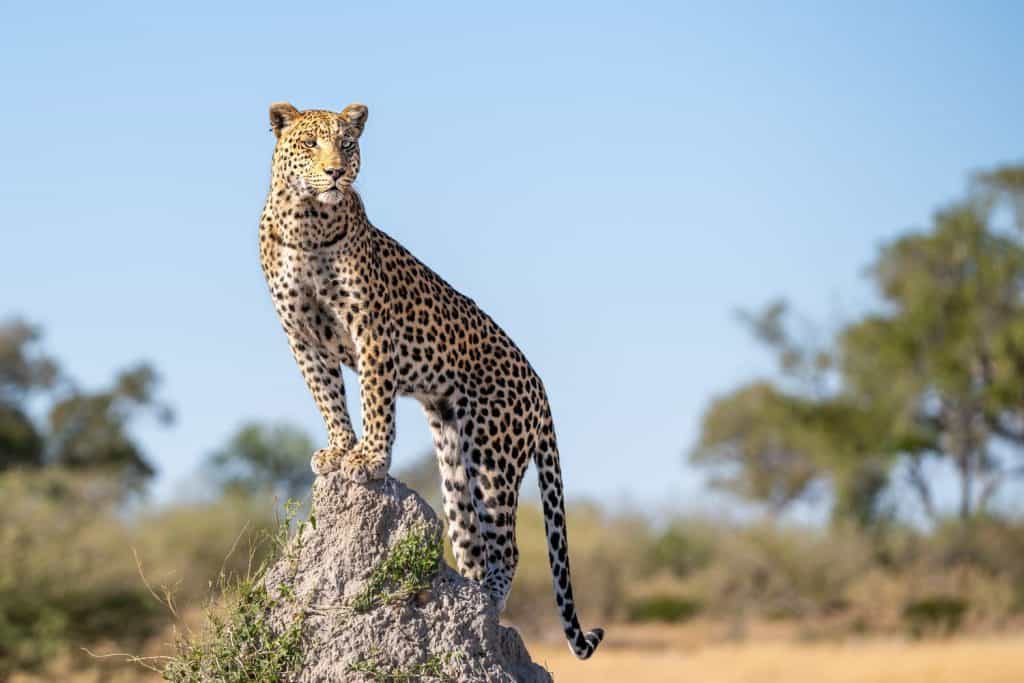
Leopards are the most widespread species of all of the big cats, ranging from north to south across most of the continent of Africa except for the Sahara, and from east to west in Asia, from eastern Türkiye to western China and Russia, and going as far south as Indonesia.
A big reason leopards have such a large range is that they’ve been able to adapt to many different habitats. Being most abundant in woodlands, grasslands, savannas, and forests, they can also live in shrubland, scrub, desert, rocky, and even mountainous habitats at elevations as high as 5,200 metres. Leopards have learned to live alongside people, not only in suburban areas, but even in highly urban areas. For instance, there are populations of leopards in central Mumbai, India, a city of over 12 million people and one of the ten largest cities in the world.
Jaguars also occupy a large geographic span, with their present-day range spreading across Central and South America from northern Mexico, with even a few individuals in southern Arizona and New Mexico in the United States, to northern Argentina and parts of southern Brazil.
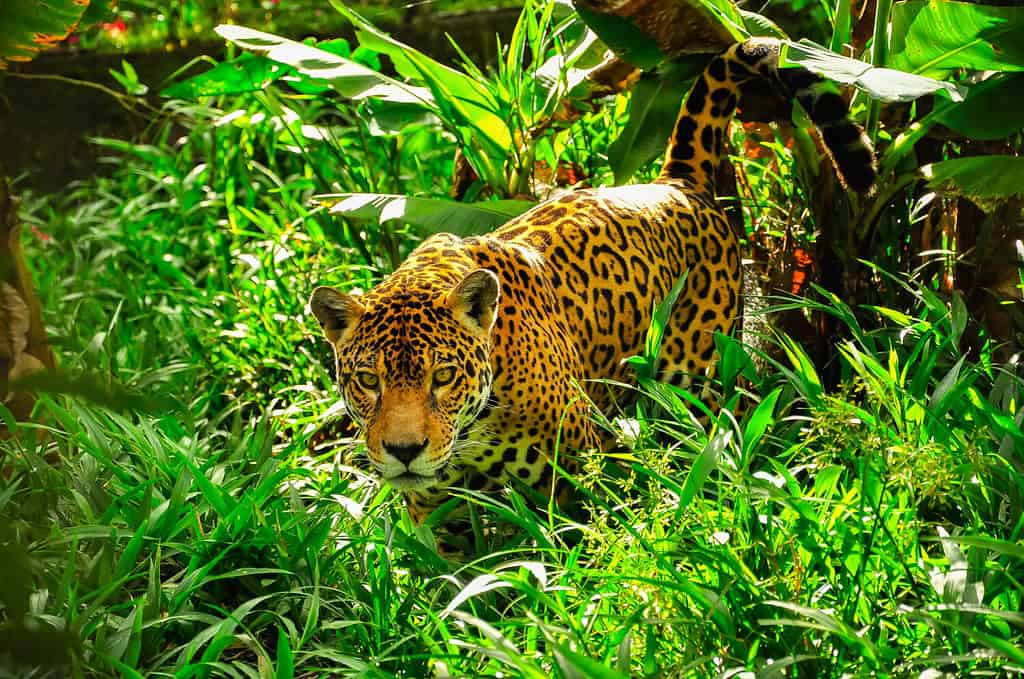
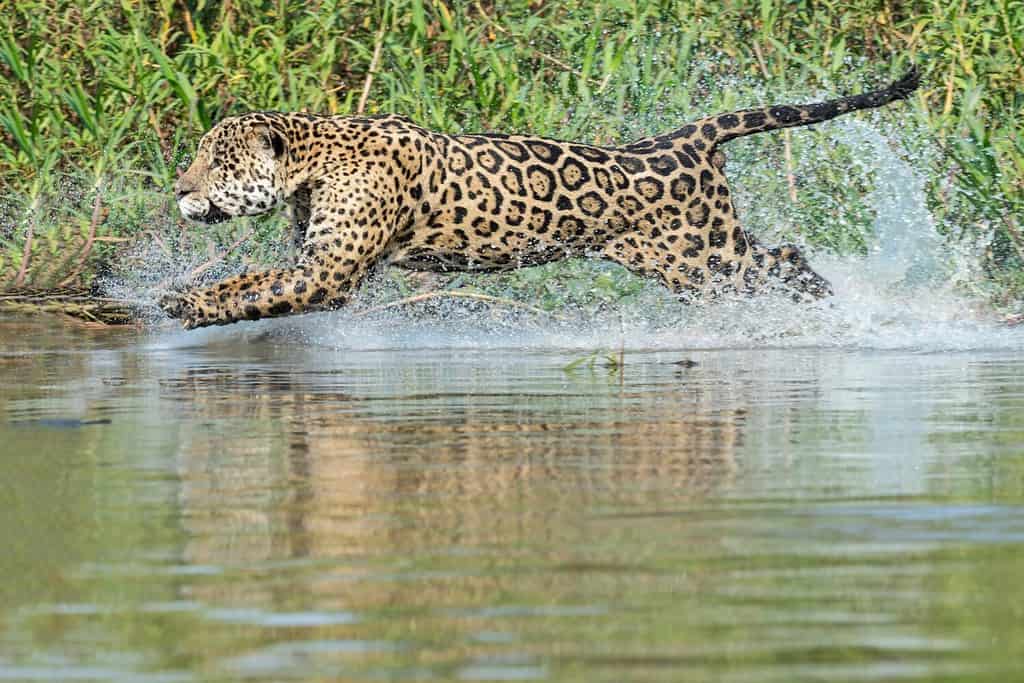
Jaguars are dependent on dense cover, a source of water, and enough prey to hunt. They swim incredibly well and are strongly associated with water bodies such as rivers, streams, and swamps. Ideal habitats are dense, tropical lowland forests with lots of cover close to water, but they will also inhabit pampas grasslands, scrubland, coastal forests, dry deciduous forests, swamps, thickets, and, at times, lowland pastures. In drier habitats, they will only be found closer to water sources.
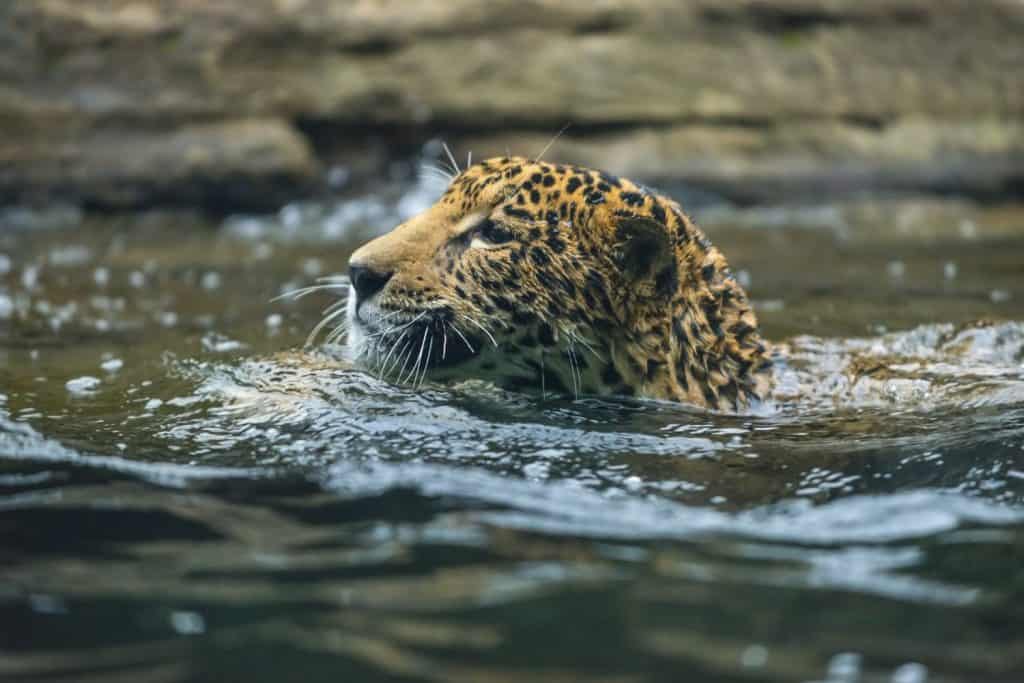
Jaguars usually avoid mountainous forests, but have been detected at elevations as high as 3,800 m. Also different from leopards, jaguars have not adapted well to human development and are unlikely to be found even in more suburban areas. There is no area of the world where jaguar and leopard populations overlap.
Appearance and Size Differences
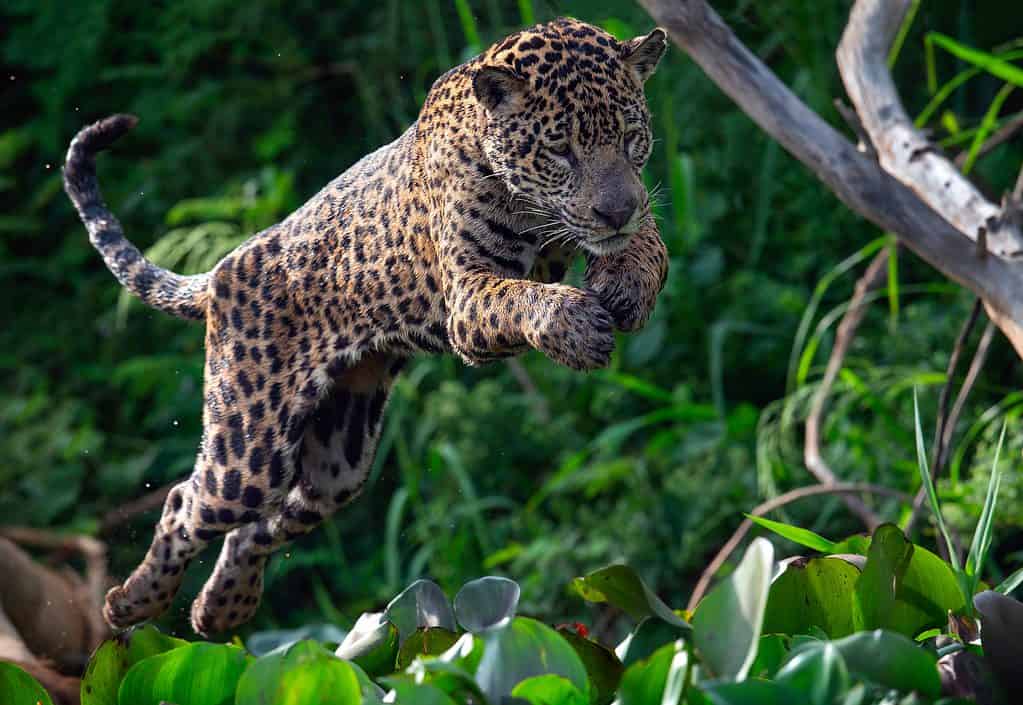
If you don’t have a geographic reference, the easiest way to tell the difference between leopards and jaguars is by taking a closer look at their spots. Both leopard and jaguars have tawny colored coats with black “spots,” which are actually rosettes. Unlike the solid black spots that a cheetah has, these rosettes are oval-shaped with a thick black border, but are empty inside. In both species, the insides of the rosettes are typically a darker shade of the coat color, and closer to the animal’s legs and head, the rosettes are filled in to look like solid black spots.
Within the rosettes, you can make out differences between the two species. Jaguars have small black spots within their larger rosettes, whereas leopards don’t. However, this method is not one hundred percent fail-proof. Although incredibly rare, leopards have been observed on camera traps to have spots within their rosettes similar to jaguars.
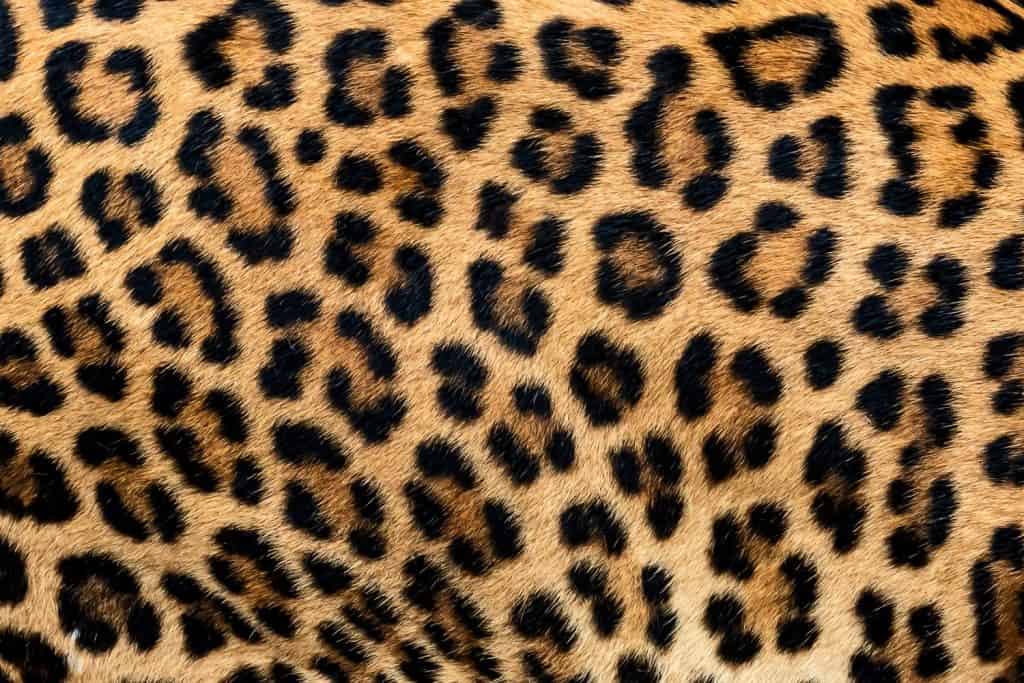
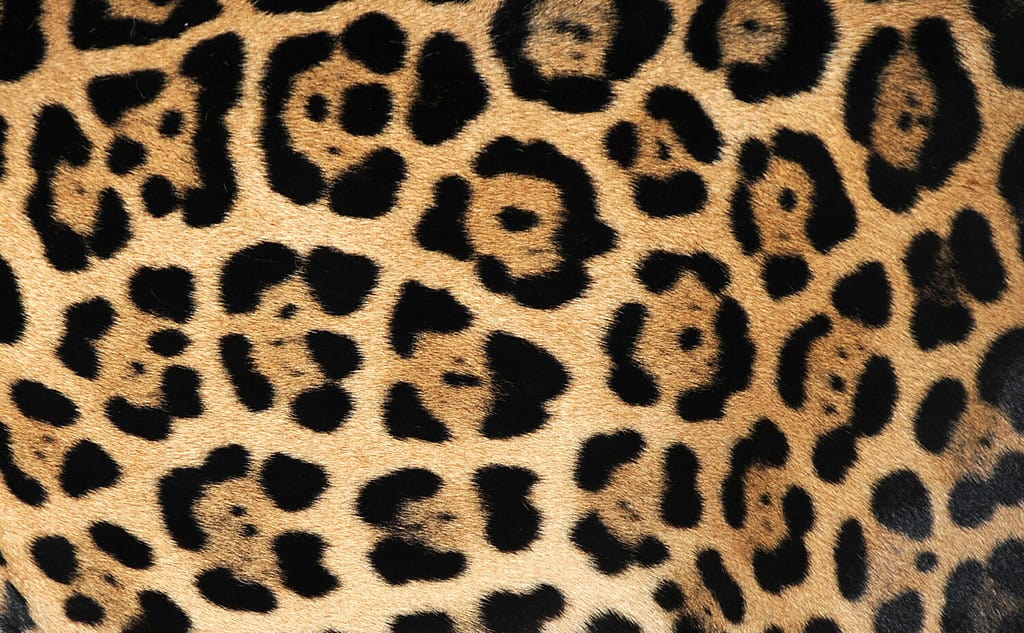
Leopards and jaguars both share the characteristic of having variation in coat color and pattern, which often correlates with habitat. For instance, lighter yellow coat colors tend to occur in drier habitats, while darker, more reddish-orange colors are more prominent in denser forests. Rosettes may be denser in some individuals and more spread out in others. Each leopard or jaguar has a unique pattern of rosettes, which scientists use in research to identify individuals and estimate population sizes.
Both jaguars and leopards can also be melanistic, in which case they appear to be uniformly black due to a mutation. Surprisingly, this mutation is dominant in jaguars, but recessive in leopards. Colloquially called a “black panther,” individuals are actually not solid black, and under bright light, one can make out the darker rossettes.
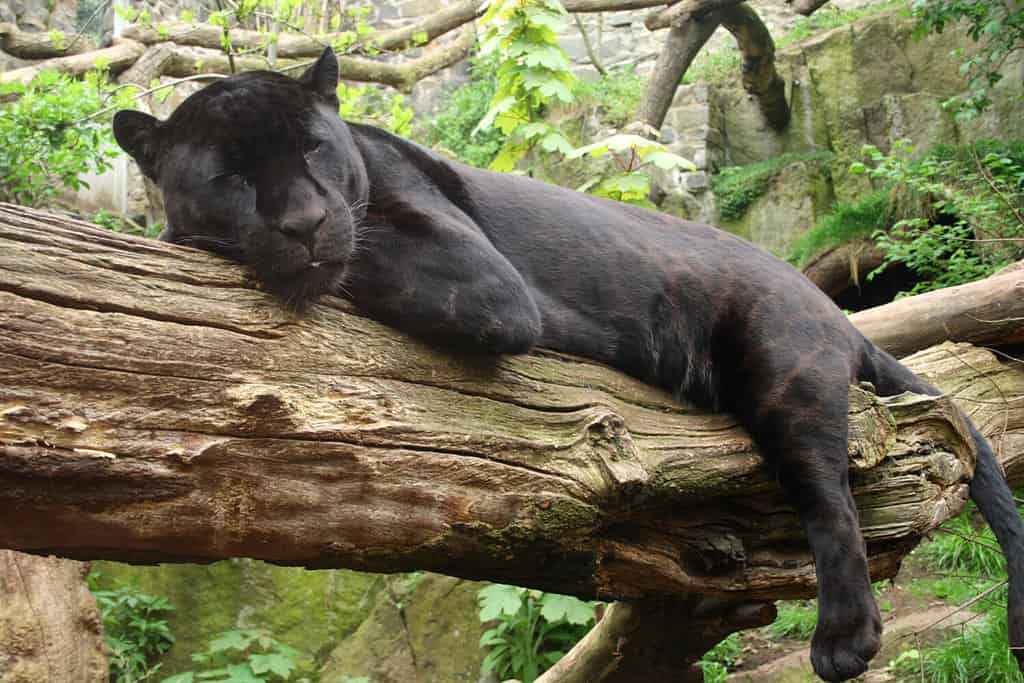
Aside from their spots, there are other morphological differences between the species. For instance, jaguars are larger overall, appear more robust, and are heavier than leopards. Although leopards are the smallest of the big cat species, they can be longer than jaguars from nose to tail tip. Leopards range from 1.6-2.3 m (5.3-7.6 ft) long, while jaguars can be between 1.5-1.9 m (4.9 to 6.0 ft). Jaguars can be twice as heavy as leopards, from 68-136 kg (approximately 150-300 lbs) to a leopard’s 17-65 kg (37-143 lbs) weight.
Prey
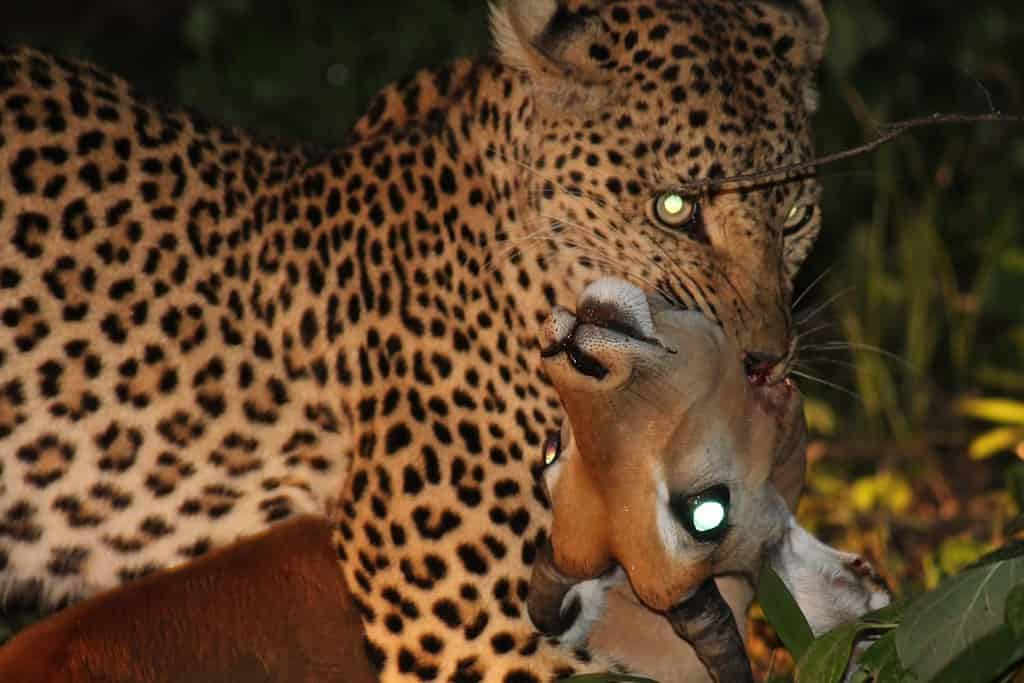
Leopards and jaguars are carnivores and ambush predators, hunting their prey from a concealed location. Their spots provide excellent camouflage, allowing them to get as close as several meters from their prey without detection. They crouch low to the ground, pounce, and bite. Leopards typically break the neck of their prey, causing paralysis, while jaguars pierce prey in the back of their skull with their canines, which causes death instantly, or they suffocate them.
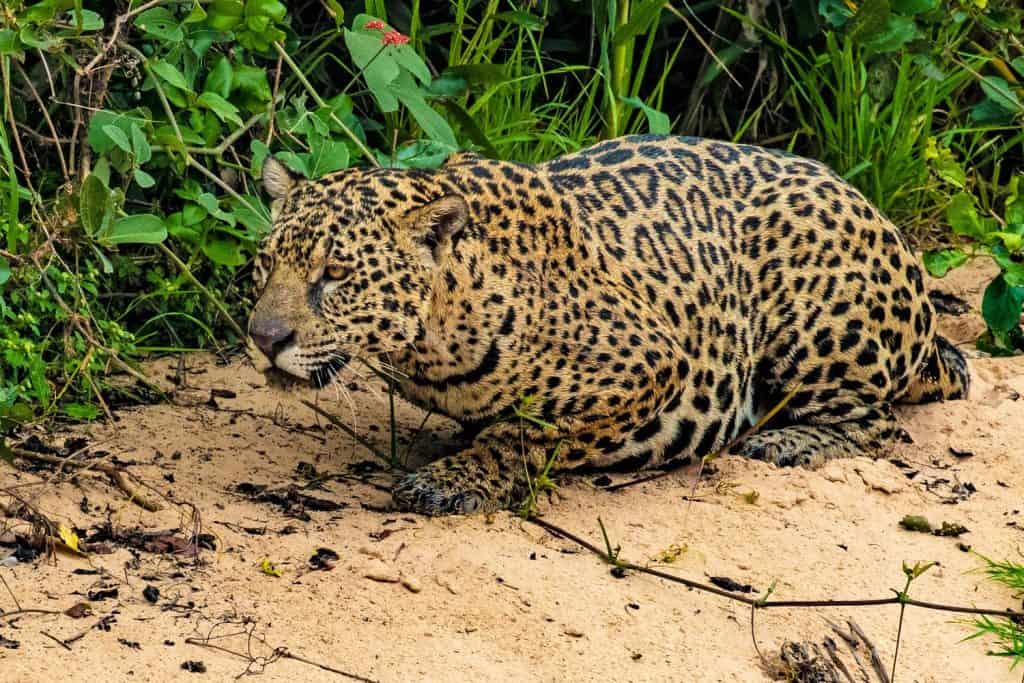
Both big cat species prefer to hunt larger prey, which includes antelopes, gazelles, deer, domestic livestock, pigs, and primates for leopards, and peccaries, tapir, and deer for jaguars. They are also both opportunistic hunters and, when larger prey are not available, will go after smaller animals such as birds, reptiles, rodents, arthropods, and even carrion. Jaguars’ diet includes over 85 species overall, which includes caimans, turtles, snakes, porcupines, fish, and capybaras. Both species tend to carry the carcass to a feeding location, which, for leopards, is often in the branches of a nearby tree. They can hunt and carry prey up to ten times their body weight.
Predators
Adult leopards and jaguars both have no real predators outside of humans. Humans hunt leopards and jaguars for their fur, which is illegal in most places for jaguars and for leopards, depending on the country of origin. Both species suffer from illegal retaliatory killings by humans due to real or perceived livestock predation. Leopards tend to prey on livestock only when natural prey populations are low, or they become sick or injured and are unable to hunt wild prey reliably. Leopards are also taken by humans for the illegal pet trade.