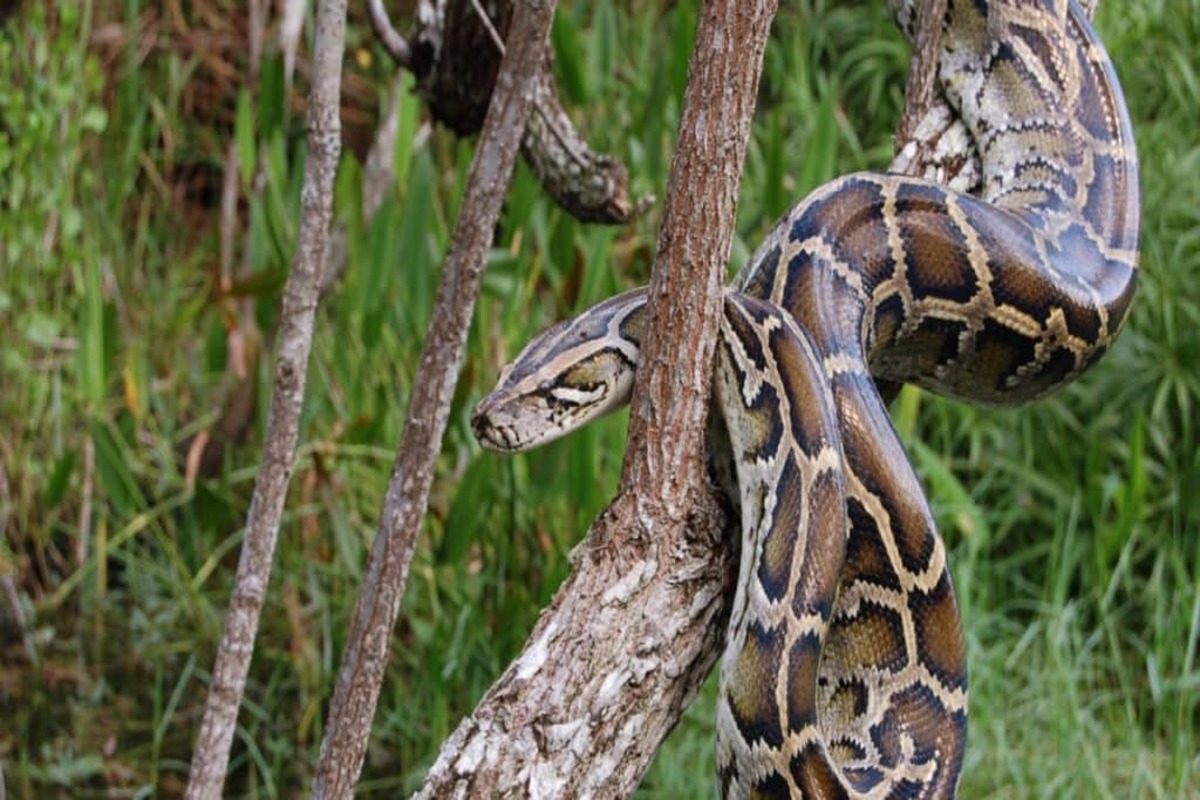
Snakes have one of the strangest and most shocking feeding styles in the animal kingdom. Unlike mammals, they do not tear their food into pieces or chew it before swallowing. Instead, many snakes use flexible jaws, powerful muscles, and an extremely expandable body to swallow prey whole. That means a snake’s meal can sometimes look almost impossible compared to the size of the snake itself.
Many snakes can also go long periods without eating, which makes their meals even more impressive when they finally strike. After catching prey, some species may spend days or even weeks digesting a single huge animal. For the largest snakes on Earth, that prey can include deer, wild pigs, antelope, crocodilians, and in one especially shocking case, even a hyena.
In this slideshow, you’ll meet several incredible snakes known for swallowing enormous meals. Some rely on venom, others use brute constriction, and a few are capable of taking down animals that seem far too large to fit inside a snake. One of the most astonishing examples is a species powerful enough to eat a 150-pound hyena whole, proving just how extreme a snake’s appetite can be.
What Is the Largest Animal Ever Eaten by a Snake?
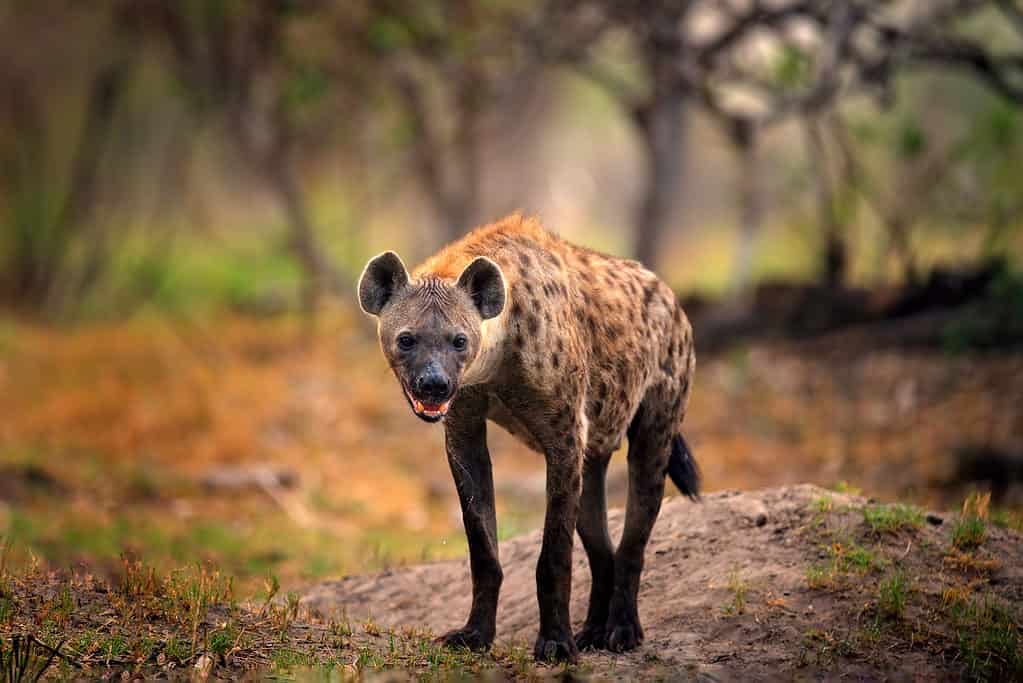
The largest recorded animal ever eaten by a snake was a roughly 150-pound hyena swallowed by an African rock python in 2017. The astonishing encounter was documented by National Geographic, which filmed the 12-foot-10-inch python coiled around the hyena before beginning the slow process of swallowing it whole. For an animal most people think of as a predator, a hyena becoming a snake’s meal was shocking enough to make headlines around the world.
Before that encounter, the largest widely reported animal eaten by a snake was a 130-pound impala consumed by an African rock python in 1955. Both cases show just how powerful large pythons can be when they choose the right moment to strike. These snakes do not need claws, speed, or venom to overpower prey. Instead, they rely on ambush, strength, patience, and one of the most extreme swallowing abilities in the animal kingdom.
Still, it is important to remember that “largest recorded” does not necessarily mean “largest ever.” Wild snakes often feed in remote areas where no one is watching. It is entirely possible that larger animals have been swallowed by pythons or anacondas without ever being documented by scientists, cameras, or eyewitnesses.
Snake Swallowing Hyena

The sight of a snake swallowing a hyena is so unusual because hyenas are usually thought of as dangerous predators, not prey. Hyenas have strong jaws, sharp teeth, and a reputation for being tough scavengers and hunters. In many ecosystems, they compete with lions, leopards, wild dogs, and other major carnivores. That makes the 2017 python encounter especially surprising, since it showed that even a formidable predator can become vulnerable under the right conditions.
African rock pythons are known to eat a wide range of animals, including mammals, birds, and reptiles. Although large predators such as big cats and hyenas can threaten pythons, the relationship is not one-sided. Rock pythons may occasionally target young, weakened, or isolated carnivores if the opportunity appears. The hyena case forced scientists and wildlife watchers to reconsider just how ambitious these snakes can be when choosing prey.
The encounter also highlights how risky large meals can be for snakes. Swallowing an animal as large as a hyena requires an enormous amount of energy and leaves the snake vulnerable while it digests. A python that has just eaten a massive meal may be slower, less mobile, and more exposed to predators or human disturbance. Even so, the reward can be worth it. One huge meal can sustain a large snake for a long time.
Python Diets

Pythons are among the most impressive eaters in the reptile world. They are capable of consuming animals that look far too large to fit inside their bodies. Depending on the species and the snake’s size, pythons may eat birds, monkeys, deer, pigs, goats, dogs, antelope, reptiles, and even crocodilians. Their diet changes based on habitat, prey availability, and the size of the individual snake.
In Florida, where Burmese pythons have become an invasive species in the Everglades, these snakes have been documented eating mammals such as raccoons, rabbits, foxes, and deer. In 2018, researchers documented a Burmese python swallowing a white-tailed deer that weighed about 35 pounds. That may not sound as extreme as a 150-pound hyena, but it was still an enormous meal relative to the snake’s own size.
Large pythons have also been involved in rare but serious attacks on humans. Reticulated pythons, the longest snakes in the world, have been reported in a small number of cases killing and consuming people. These incidents are extremely rare, but they show that the largest constrictors are physically capable of overpowering surprisingly large prey when conditions allow.
Which Species of Snakes Regularly Eats the Largest Animals?
The snakes that regularly eat the largest animals are almost always giant constrictors. Unlike venomous snakes, constrictors do not depend on toxins to kill prey. Instead, they wrap their powerful bodies around an animal and squeeze until the prey can no longer breathe or circulate blood properly. This method allows large constrictors to overpower prey that would be impossible for many other snakes to handl
African Rock Python
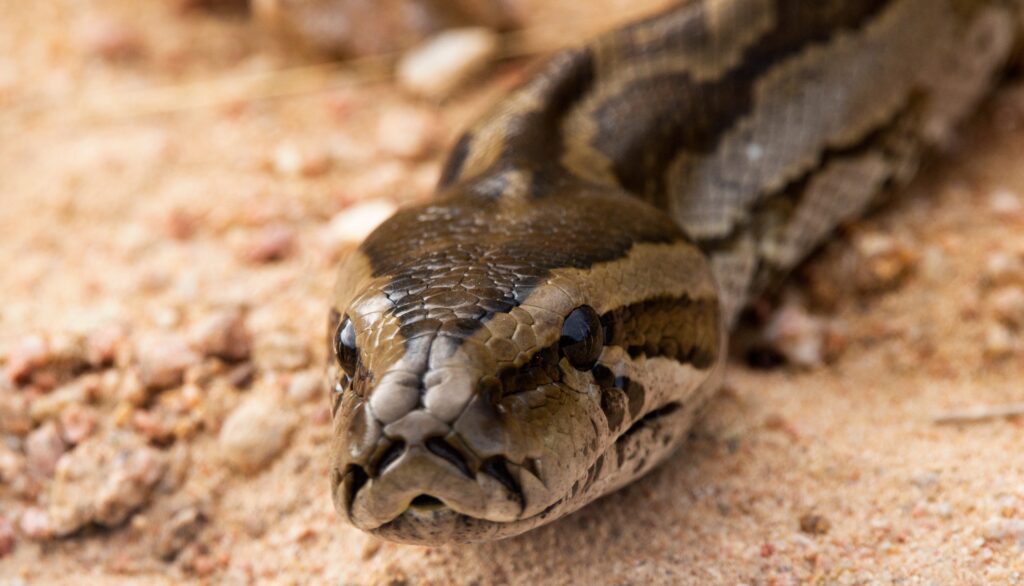
The African rock python is found across much of sub-Saharan Africa and is one of the largest snakes in the world. It is a heavy-bodied constrictor with tremendous strength, allowing it to ambush and overpower large prey. This is the species that currently holds the record for the largest documented snake meal, thanks to the 150-pound hyena swallowed in 2017.
African rock pythons are opportunistic predators. They do not specialize in just one type of prey. Instead, they feed on whatever animals are available and manageable in their habitat. Their diet can include small mammals, birds, reptiles, and much larger animals when the python is big enough to handle them.
African Rock Python Diet
The African rock python regularly eats a wide variety of animals, including monkeys, warthogs, antelopes, vultures, crocodiles, dogs, and goats. Its diet depends heavily on where it lives and what prey is available nearby. In some regions, it may feed mostly on smaller mammals and birds. In others, it may take much larger prey near rivers, farms, or savanna habitat.
These snakes are powerful enough to target mammals that can fight back, which makes every large meal a gamble. A warthog, antelope, or young crocodile can injure a python if the snake fails to secure its grip quickly. That is why ambush is so important. The python must strike suddenly, seize the prey, and coil before the animal has much chance to escape.
Green Anaconda
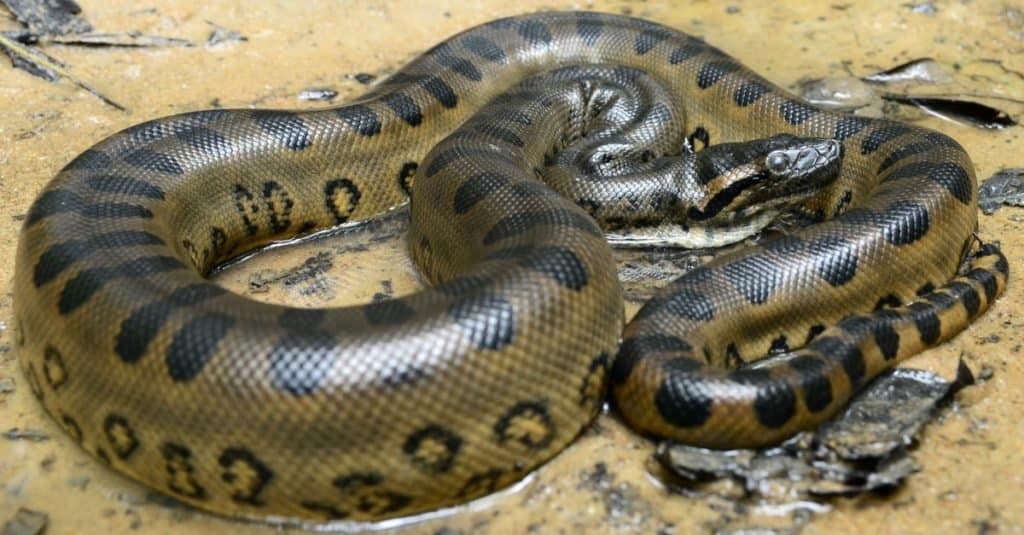
The green anaconda is often considered the largest snake in the world by weight. While reticulated pythons can grow longer, green anacondas are famously massive, thick-bodied snakes that can weigh well over 100 pounds. They are native to South America and are closely associated with the Amazon Basin, wetlands, slow-moving rivers, and flooded forests.
Water is a major part of the green anaconda’s hunting strategy. These snakes are excellent swimmers and often ambush prey from beneath the surface. Their eyes and nostrils sit high on the head, allowing them to remain mostly hidden while watching for animals that come close to the water. This makes them especially dangerous to mammals and reptiles that come to drink, cross, or forage near rivers and swamps.
Green Anaconda Diet
Green anacondas eat tapirs, deer, capybaras, caimans, monkeys, birds, fish, and other animals that live near or enter the water. Capybaras are especially common prey because they share wetland habitats with anacondas. Caimans can also become prey, although attacking another reptile with strong jaws and armored skin is risky.
A large green anaconda does not need to eat frequently. Like other giant constrictors, it can survive for long periods between meals. When it does catch something large, the snake may spend days digesting in a hidden, sheltered location. Its metabolism allows it to make the most of a single large meal.
Reticulated Python

The reticulated python is widely considered the longest snake in the world. These snakes can reach lengths of more than 20 feet, with some exceptional individuals reportedly growing even longer. Native to South and Southeast Asia, reticulated pythons live in forests, wetlands, grasslands, and areas near human settlements.
Their length gives them enormous constricting power, and their range brings them into contact with many different prey animals. Reticulated pythons are strong swimmers and capable climbers, which allows them to hunt in several types of environments. They are also one of the snake species most often associated with extremely large meals.
Reticulated Python Diet
Reticulated pythons eat Indian civets, binturongs, monkeys, pigs, deer, birds, rodents, and other mammals. Their diet expands as they grow. Young reticulated pythons eat smaller prey, while large adults can take on pigs, deer, and other sizable animals.
One of the most striking reported meals involved a reticulated python consuming a sun bear. Sun bears are strong animals with claws and teeth, so this kind of prey would be extremely dangerous for a snake. Such cases are rare, but they demonstrate the outer limits of what giant constrictors may attempt.
Burmese Python
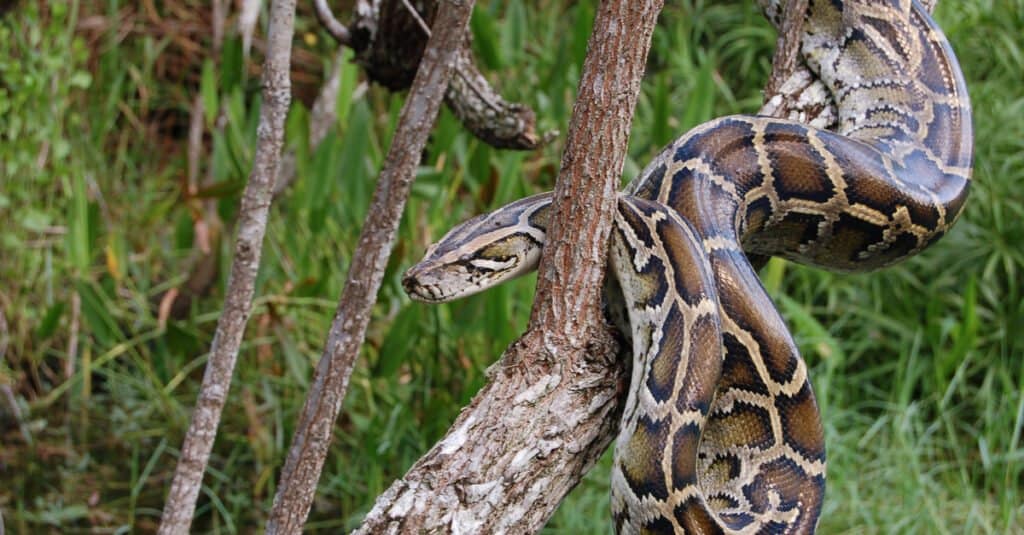
The Burmese python is one of the largest snakes in the world and is native to parts of Southeast Asia, India, and Nepal. It has also become one of the most famous invasive species in the United States because of its established population in the Florida Everglades. In Florida, Burmese pythons have had a major effect on native wildlife populations.
These snakes are powerful constrictors that can thrive in wetlands, forests, grasslands, and marshy environments. Like other giant pythons, they are ambush predators. They wait for prey to come within striking distance, then grab it with sharp teeth and coil around it with tremendous force.
