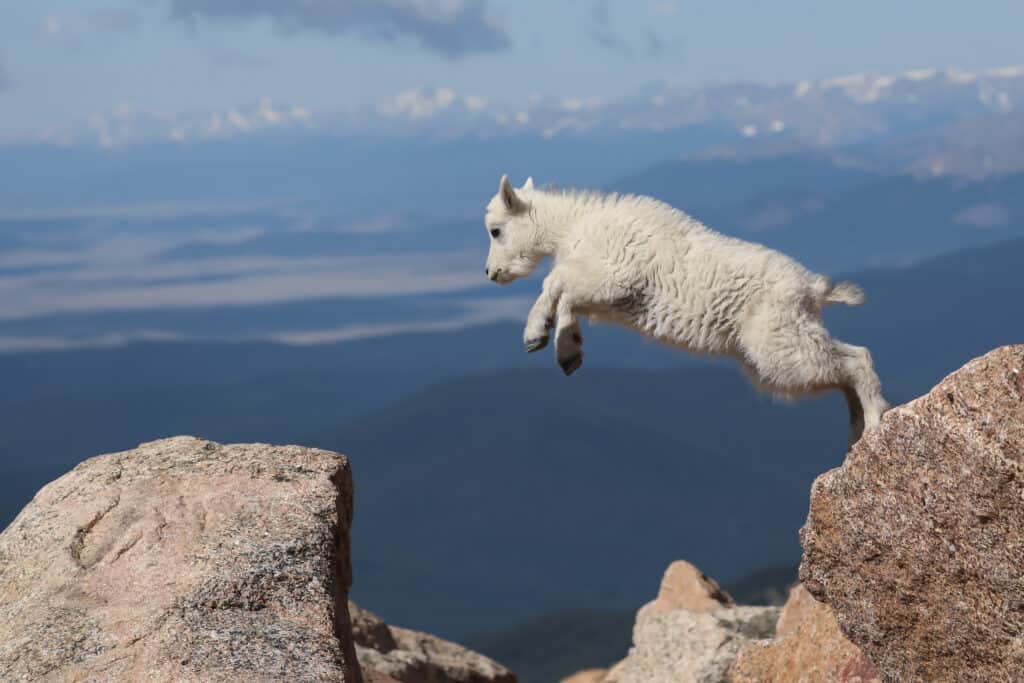
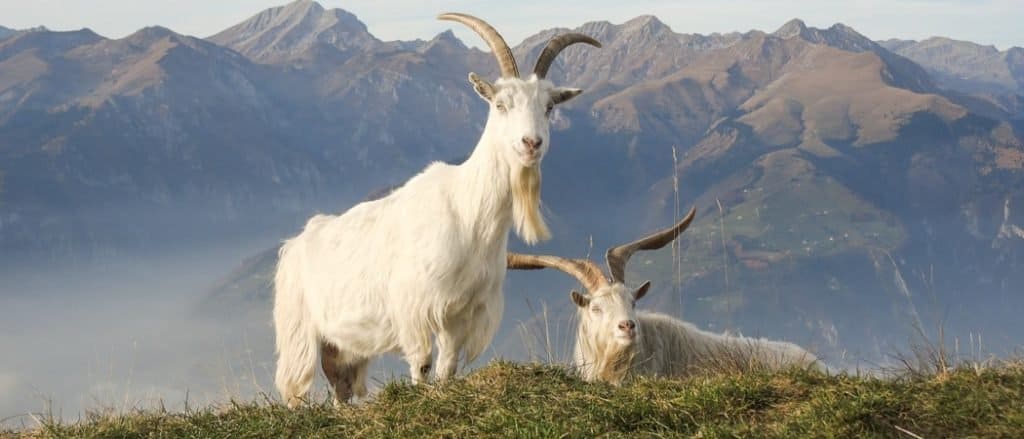
Mountain 699582241 are one of the few animals that thrive in high elevations. They are often seen on mountain sides and cliffs, seemingly clinging to the rocks. They seem to defy gravity with their magical ability to climb steep, nearly vertical walls.
What Are Mountain Goats?
Mountain goats are not actually goats. They are the only species in their family and are more closely related to antelopes and gazelles than domestic goats.
Mountain goats are well-adapted to their high-altitude homes. They have thick white fur coats that protect them from the cold and help them to blend in with their rocky and snowy surroundings.
It’s estimated that there are around 100,000 mountain goats in the world. They live in western North America, primarily in the Rocky Mountains and the Cascades of the United States and Canada.
Why Do Mountain Goats Climb Mountains?
Mountain goats climb mountains for two main reasons: to find food and to escape predators.
Mountain goats are herbivores, and their diet consists mostly of grasses, sedges, and herbs. They will also eat mosses, bark, and twigs. Since few other animals can reach the heights that mountain goats can, there is less competition for food at higher elevations.
Mountain goats are also very good at escaping predators. Their main predators are wolves, coyotes, and cougars. They are not so good at running (as other ungulates are), but by efficiently scaling the rocky landscape and traversing along treacherous ledges, mountain goats can stay out of reach of these predators.
Mountain Goats Begin Climbing When They are Just a Few Days Old
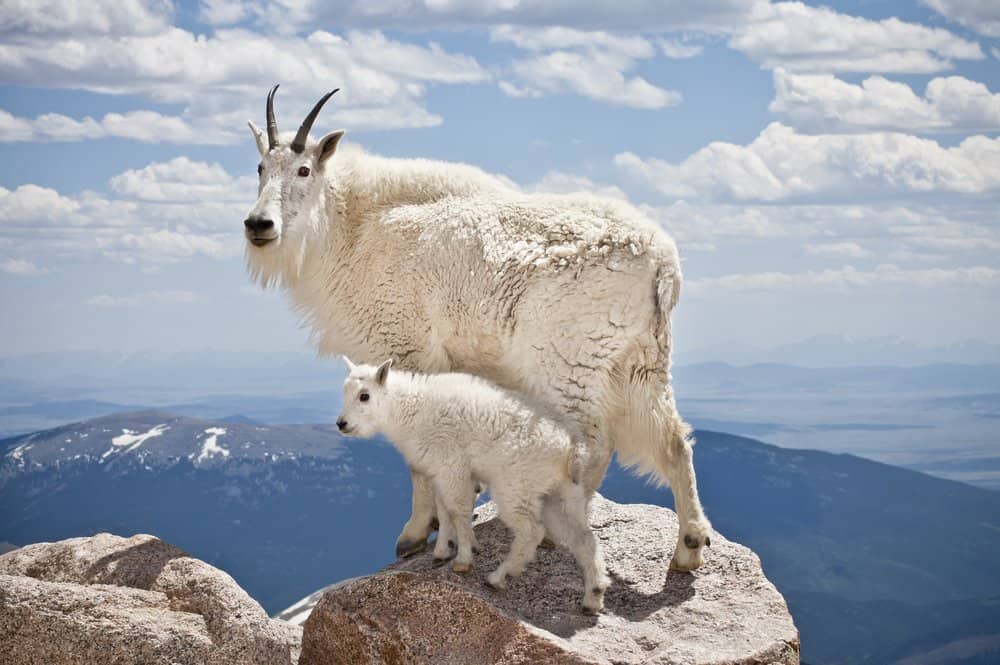
From the time they are born, mountain goats begin to learn the skills they need to climb mountains.
They are able to stand and walk within a few hours of being born, and they are usually climbing on rocks and ledges within a few days.
They follow their mothers up steep cliffs and craggy peaks, learning how to navigate the terrain and build their strength. And after just a few weeks after birth, they already have the skills they need to be mostly independent.
Mountain Goats Have Specialized Climbing Hooves
Mountain goats have several adaptations that help them to climb mountains. One of the most important is their hooves.
Mountain goats have cloven, or split, hooves. This means that each hoof, instead of being one solid piece, is actually two separate toes that they can wiggle and maneuver independently. With this dexterity, they can better grip onto rocks and ledges.
Their hooves are hard on the outside and soft on the inside. The hard outer layer protects their toes from being scraped on the rocks. The softer, inner, rubbery pads have a concave shape which not only allows them to grip the rocks better but can also act like a suction cup, providing additional traction.
Mountain goats also have sharp dewclaws on their inner toes. These dewclaws help them to grip the rocks even tighter and prevent them from slipping.
Mountain Goats are Great Leapers