In this list, you will find 9 incredible lizards that look like dragons. Dragons have been depicted in different cultures around the world for thousands of years. Even today, in movies and other media, dragons are still beloved mythical creatures that we just can’t get enough of. There is no question that lizards, snakes, and other reptiles are a big inspiration for the fire-breathing menaces we call dragons. We do not have to look in the pages of a fairy tale to find a dragon, but we can spot them around the world living in the wilderness. Dragons are creatures of imagination, but real animals have inspired the creation of these mythical reptiles. Here are 9 lizard species that look similar to dragons.
1. Bearded Dragon
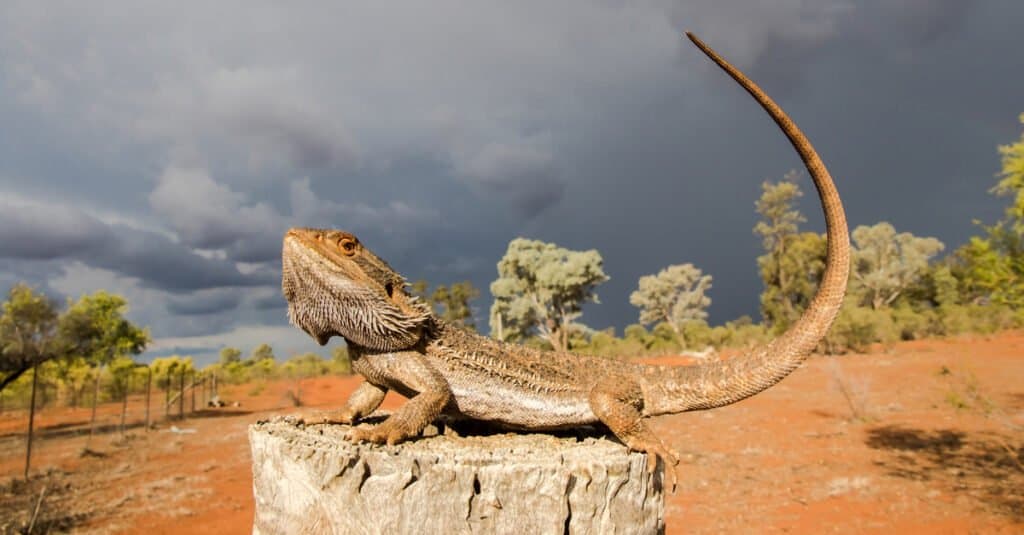
Living in the deserts, woodlands, and savanna habitats of Australia, the bearded dragon is now a popular pet lizard species that is found across the world. This lizard gets its name from the beard of spikes that appear under its neck. When in danger or angry, bearded dragons will puff off the spikes around their neck to make themselves look more threatening. In addition to the spikes on their neck, they also have spikes running down their body like actual dragons. Six species of bearded dragons exist, all located in Australia. Bearded dragons are one of the most popular reptile pets, coming in a variety of colors and sizes.
2. Chinese Water Dragon
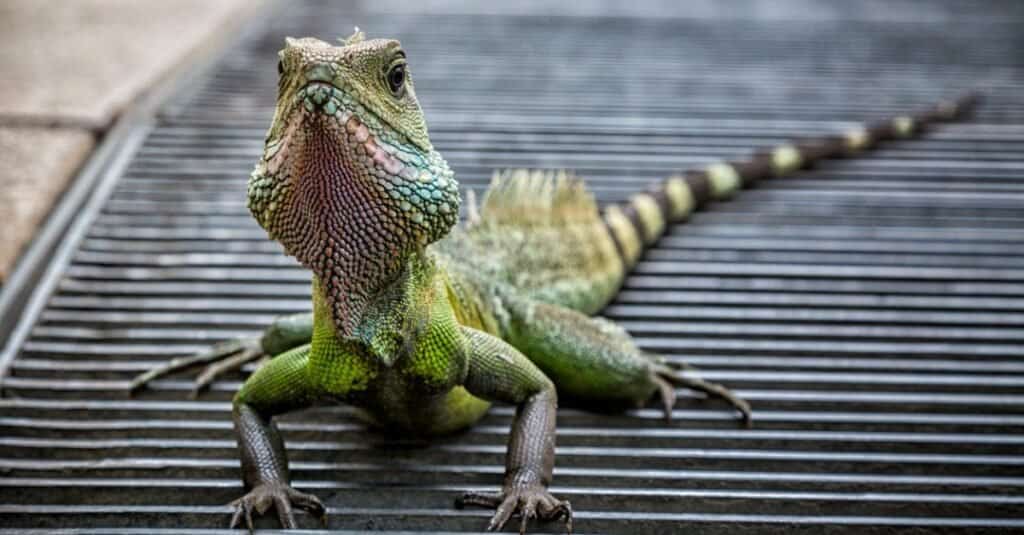
The Chinese water dragon is a species native to eastern China but also inhabits areas in Thailand, Cambodia, Burma, Laos, and Vietnam. They live in forests near freshwater sources like lakes and streams. Also a popular pet species, most Chinese water dragons in captivity are wild-caught. Chinese water dragons face population decline from the constant capturing of them in the wild and the destruction of their habitat.
Green is the most common color for this species, and they range from light to dark green with brown bands on their tail. Rough scales cover their body, and for males, more spikes cover their bodies.
3. Flying Dragon Lizards
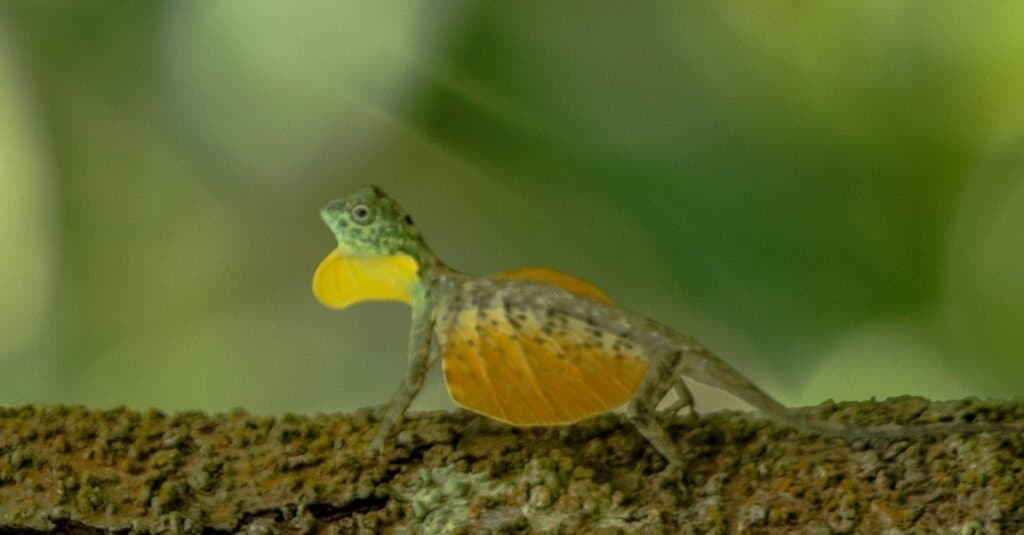
Draco Lizards are also known as the flying dragon. This lizard species is small in size, only growing up to 8.4 inches long, but is able to take flight like a dragon. There are more than 40 species of Draco lizards. Blue, red, brown, and orange are the colors they appear in. This species spends most of its time gliding from tree to tree. They glide to escape predators, hunt for insects, or chase other lizards in their territory.
Draco lizards rarely go to the ground, except when females descend to deposit eggs in the soil. In the Philippines, this species is found in wooded areas and is an abundant lizard to find. Ants and termites make up the majority of their diet.
4. Red-Eyed Crocodile Skink
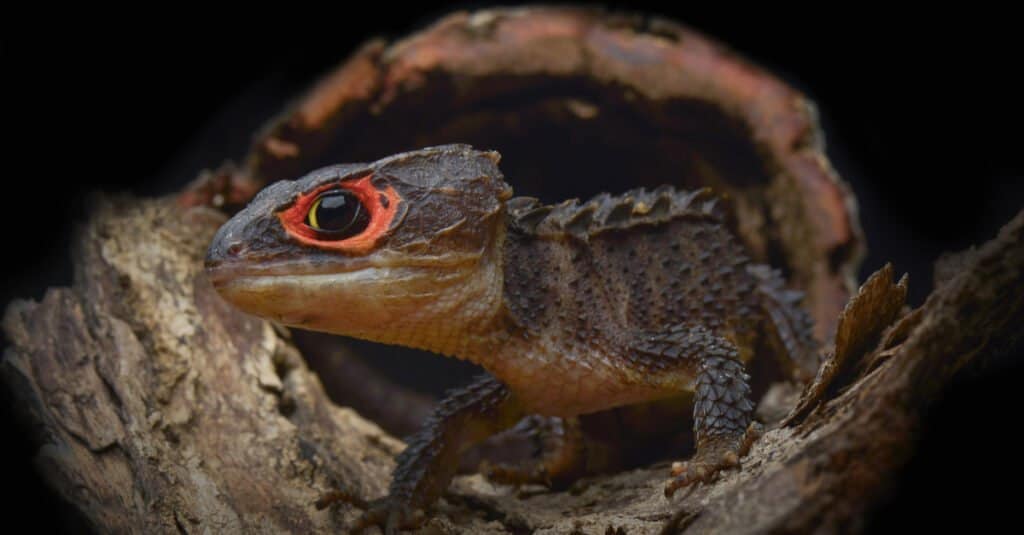
The red-eyed crocodile skink is a small species, only reaching 7 to 9 inches long. Their look and size are what make them popular pets, and they are also capable of living up to 10 years. Red markings appear around this species’ eyes, and its body resembles that of a dragon.
Red-eyed crocodile skinks have a diet similar to other small lizards, including foods like:
- Mice
- Grubs
- Worms
- Crickets
- Roches
- Mealworms
Originally from the islands of New Guinea, red-eyed crocodile skinks inhabit the forest floor in hot and humid environments.
5. Northern Caiman Lizard
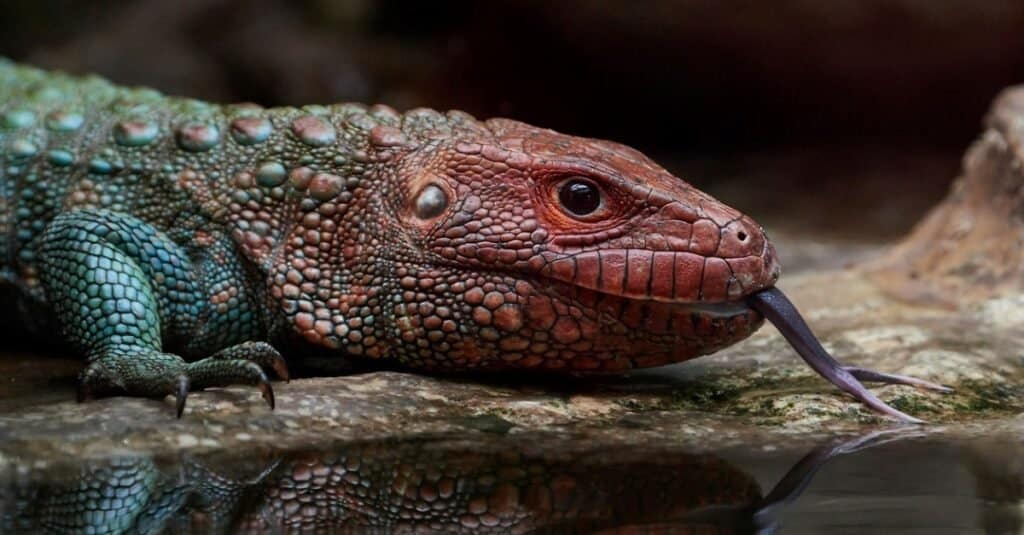
Caiman lizards are semi-aquatic lizards, painted in beautiful colors. Their head is red to orangish, and their body is tropical green. Caiman lizards will grow to around 2 to 4 feet in length and weigh about 10 lbs. Swampy habitats in South America are where this species lives, spending its time on land and water. If in danger, they will retreat into the water and have a third eyelid to help them see underwater.
6. Armadillo Girdled Lizard
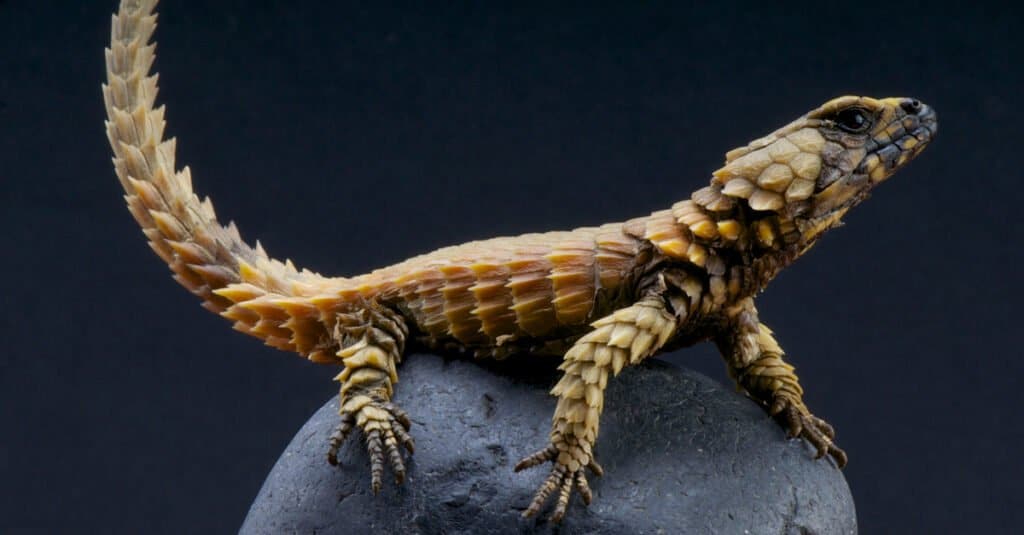
In South Africa, it is possible to come across a small armored lizard species hiding in the deserts along the western coast of the country. The Armadillo Girdled Lizard is a dragon-like species that also has traits similar to an armadillo. To protect itself from predators, this species will roll into a ball by putting its tail into its mouth. Thick scales and spines cover their body for protection. Being a similar color to sand, they are able to effectively blend into their environment.
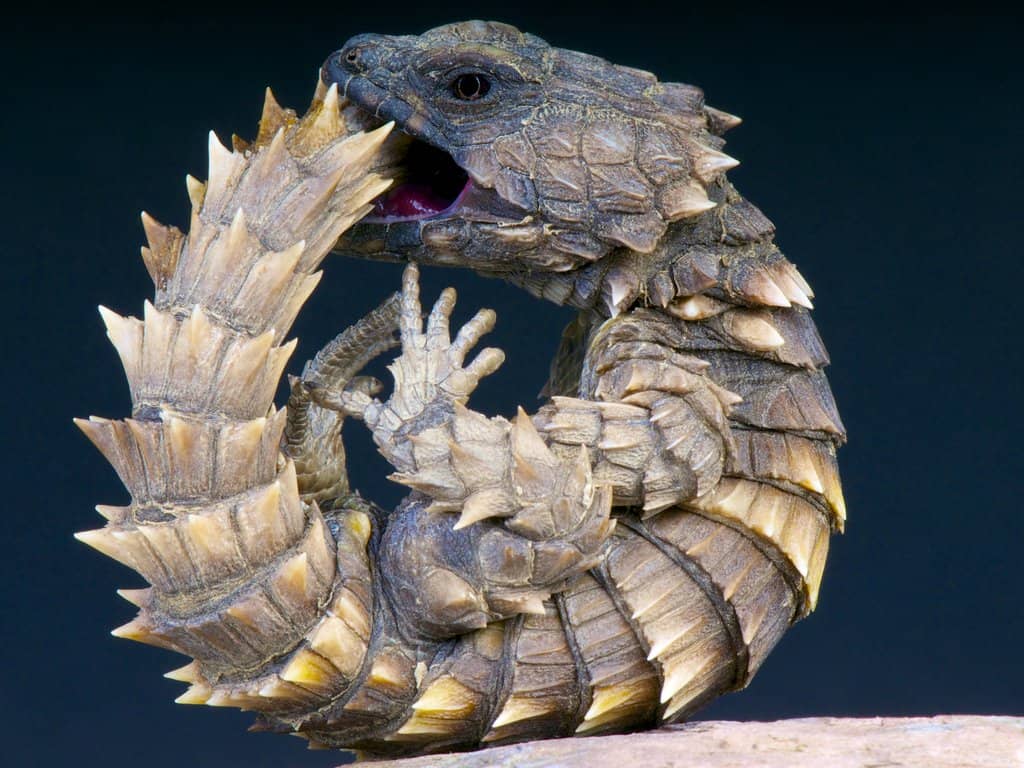
Armadillo-girdled lizards commonly prey on small insects and spiders. They are active during the day and will live in groups ranging from 30 to 60 members.
7. Philippine Sailfin Lizard
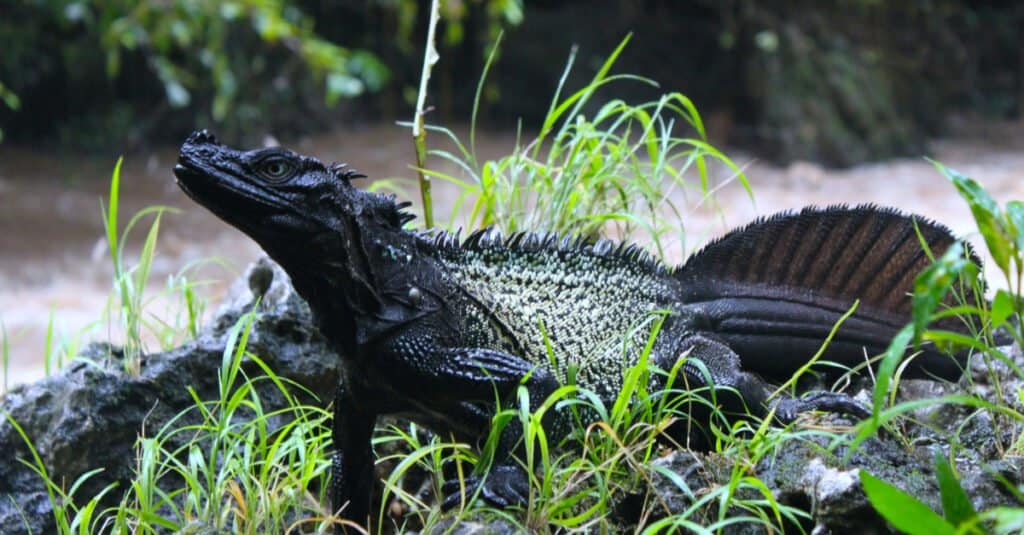
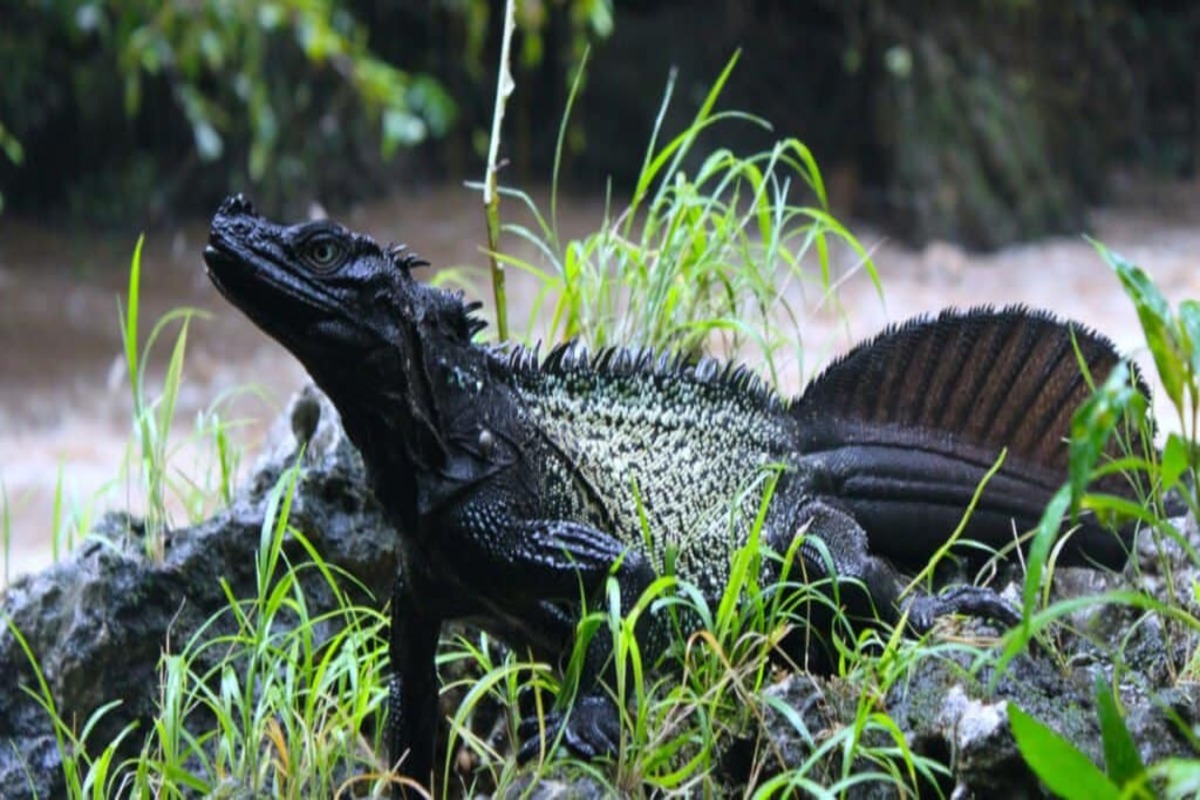
Sailfin water lizards are also called the soa-soa water lizard and crested lizards. This species is found on several islands in the Philippines. They are great swimmers, and juvenile lizards are capable of running atop water due to their body structure.
As water dragons, they are adapted for aquatic life and have a unique sailfin near their tail that helps them swim and gives them a dragon-like appearance. This species is often found hanging from trees and will dive into the water to avoid predators.
8. Marine Iguana
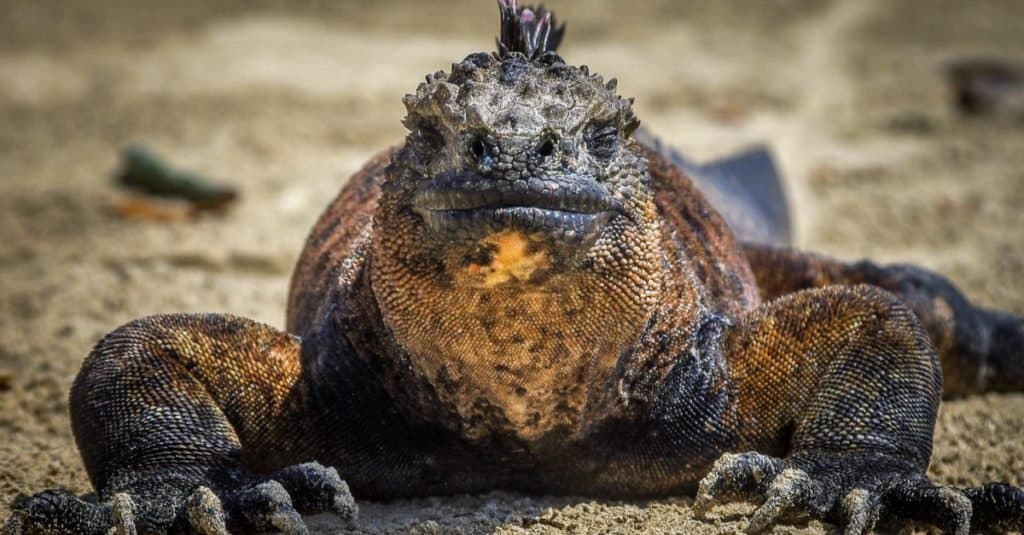
Native to the Galapagos Islands, marine iguanas are the only marine lizard species in the world. This species is believed to have evolved from land iguanas to be able to enter and thrive in ocean waters.
Black is the most common color for this species, and large spikes can be seen running down their back. Marine Iguanas are covered in rough scales and have a hardened look, making them look similar to a dragon. Their hands are large and equipped with sharp claws. Marine iguanas cannot breathe underwater, but they can hold their breath and dive for around 30 to 40 minutes.
9. Komodo Dragon
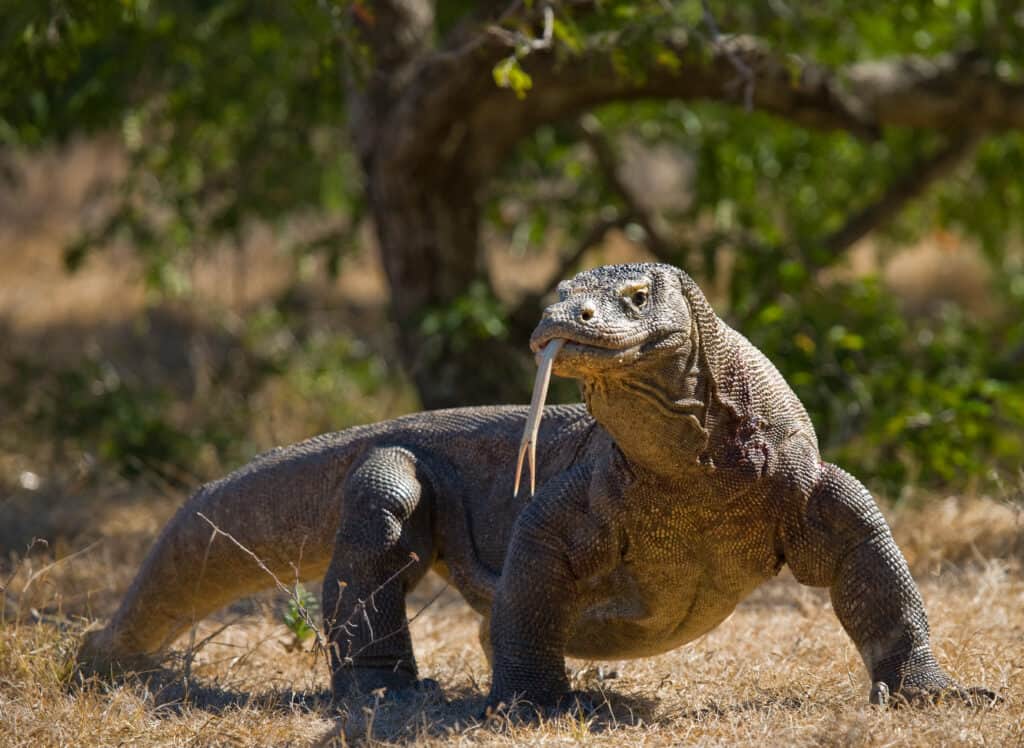
The largest lizard in the world is the Komodo Dragon. They are capable of growing up to 10 feet, and the heaviest reliably recorded individuals weigh up to around 150-200 pounds.
Komodo dragons are meat-eaters and are also quite fast for their size. They can run up to 13 mph, but kill most of their prey by stalking and overpowering them. These giant lizards are capable of eating up to 80 percent of their body weight, but if threatened, they will regurgitate their food to make themselves lighter and quicker.
A bite from a Komodo dragon is extremely painful and can be dangerous due to venom and the risk of infection. Their teeth are sharp and used for ripping flesh, and they secrete venom when they bite. Komodo dragons are as ruthless as mythical dragons.