Snakes rank among the most feared animals on Earth, yet in natural ecosystems, they are far from invincible. Many predators have evolved the ability to hunt snakes or survive encounters with them through speed, strength, protective anatomy, or venom tolerance.
Studying animals that prey on snakes reveals how predator and prey shape one another over time. Snakes evolve venom, camouflage, and warning displays. Their predators respond with faster reflexes, thicker skin, or specialized hunting methods.
Honey Badgers
Honey badgers are stocky, powerful mammals about 2 to 3 feet long and typically weighing 20 to 35 pounds. They live across sub-Saharan Africa, the Middle East, and parts of India, often in dry savannas, Their thick, loose skin, strong jaws, and fearless behavior enable them to confront dangerous prey that most animals avoid.
With long claws and crushing bite strength, honey badgers can overpower snakes by seizing the head and delivering repeated bites. They dig into burrows, rip apart logs, and probe rocky crevices where snakes hide. Their diet includes highly venomous species such as puff adders, Egyptian cobras, and other vipers.
Secretary Birds
Secretary birds are tall, striking birds of prey found throughout the open savannas and grasslands of sub-Saharan Africa. Adults stand about 3 to 4 feet tall, with long legs and a wingspan of nearly 7 feet.
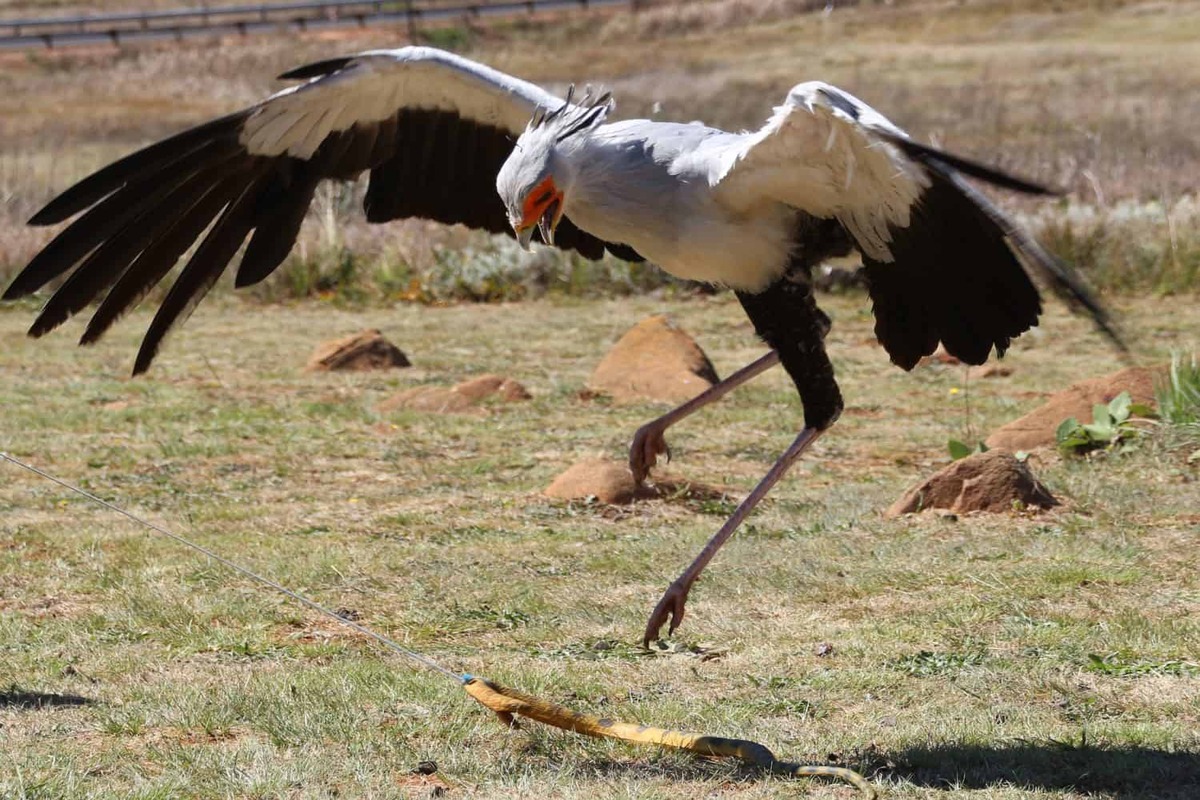
Their long legs are covered with thick scales that help protect them from bites when confronting snakes. They prey on a variety of species, including cobras, puff adders, and other venomous snakes common in African grasslands.
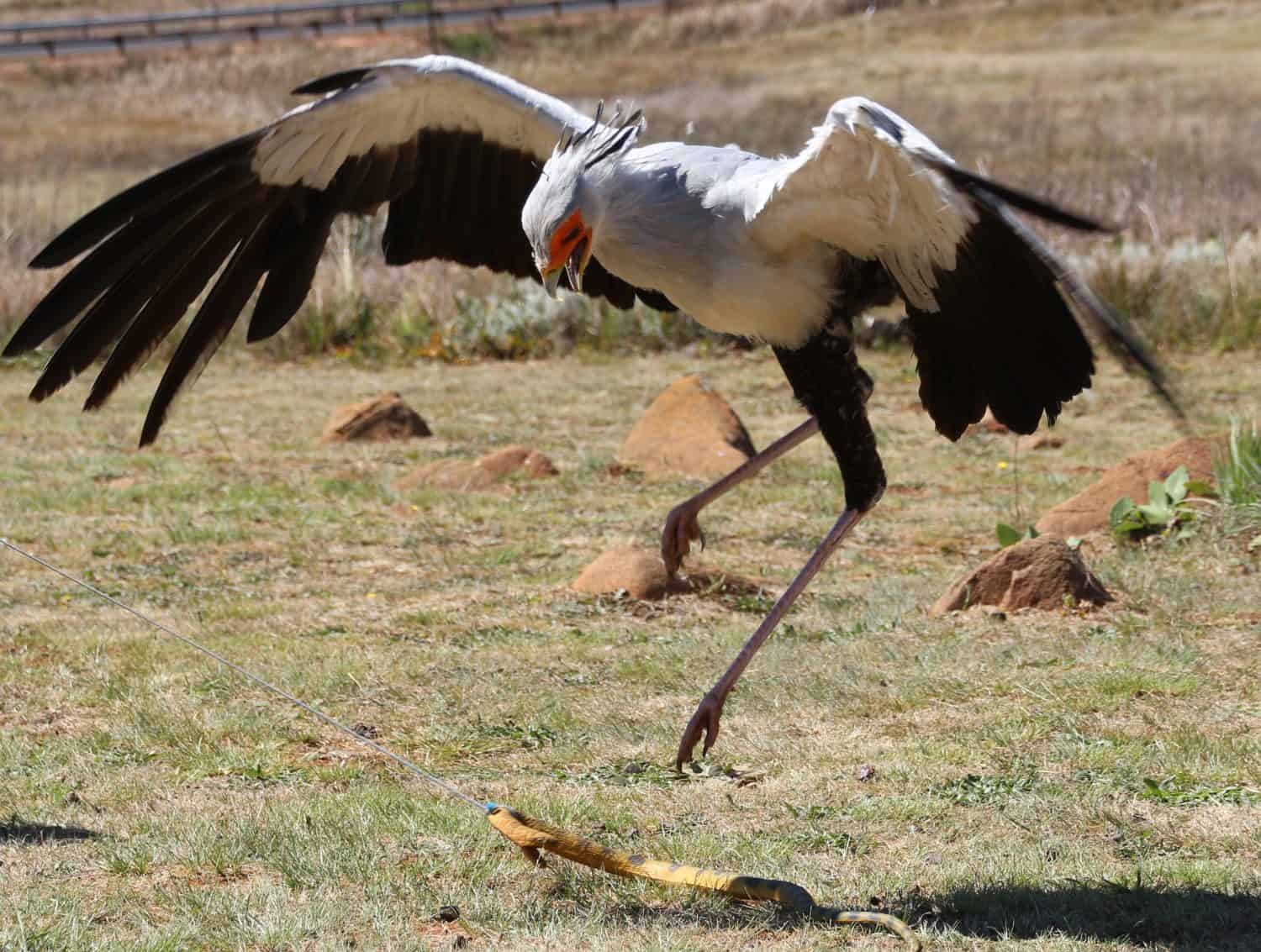
Repeated stomping quickly disables or kills the snake. Then the bird uses its hooked beak to tear and swallow the prey. Their height allows them to spot movement above tall grass, and they may walk many miles each day while foraging.
Mongooses
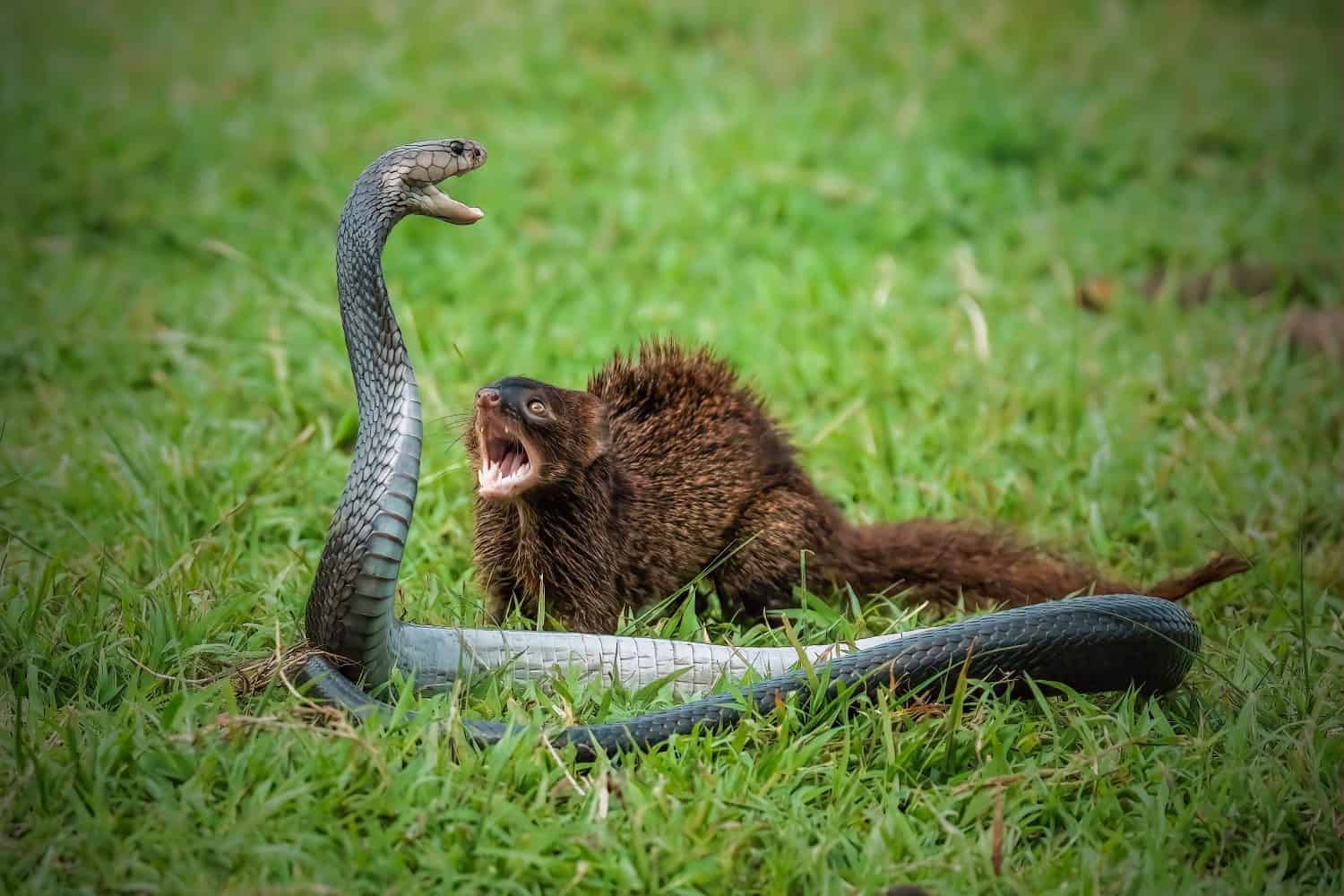
Mongooses are small, agile carnivorous mammals, typically measuring about 1 to 2 feet long (not including the tail) and weighing between 2 and 10 pounds, depending on the species. They live across Africa, southern Europe, and Asia, often in grasslands, forests, and scrub habitats where snakes are common.
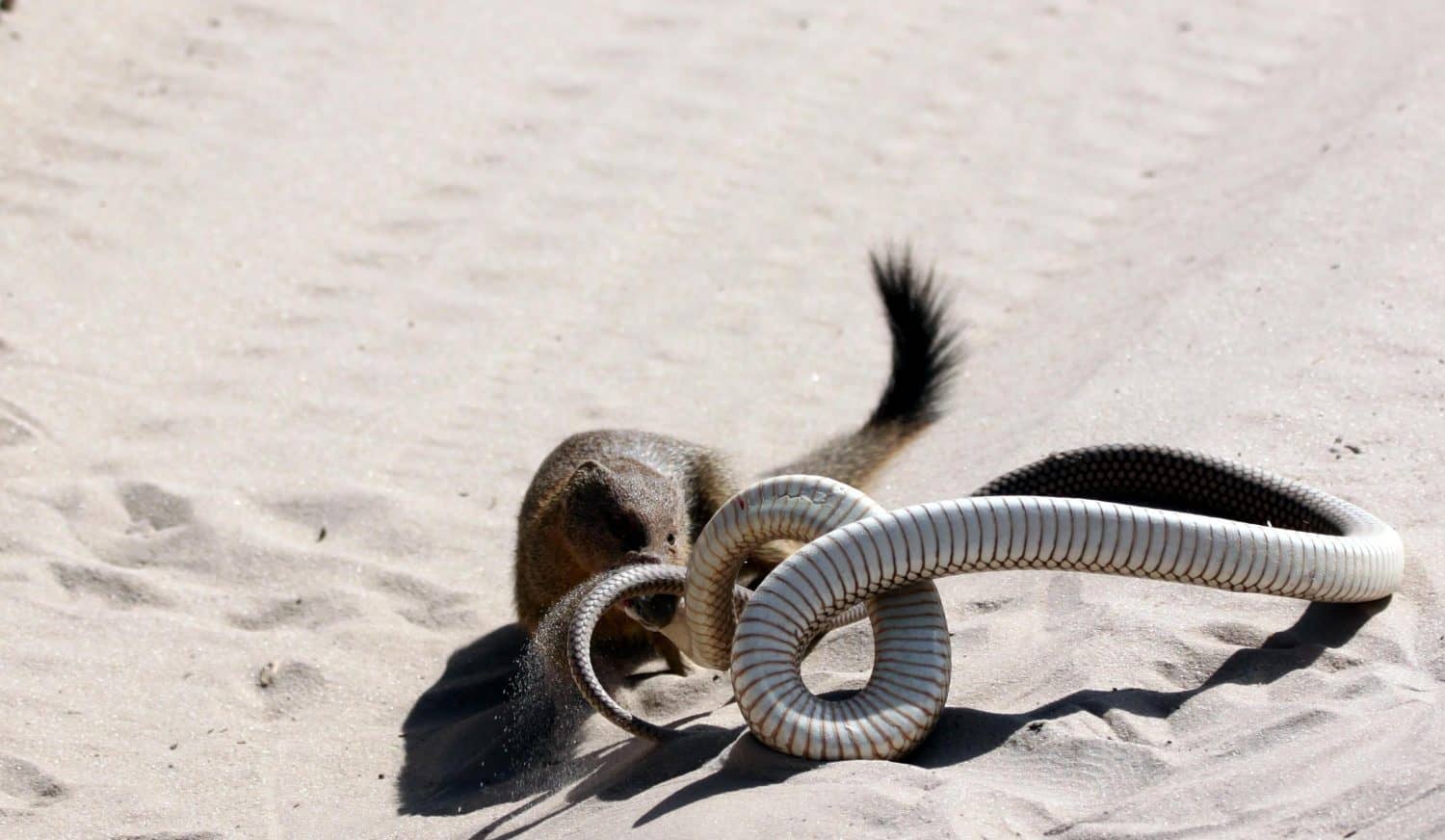
Their long, low bodies allow them to twist and change direction quickly, while sharp teeth and claws help them deliver fast, precise bites. During a fight, a mongoose relies on speed rather than brute strength, darting in and out to avoid strikes before biting the snake’s head or neck to disable it.
Some species, including the Indian gray mongoose, have partial resistance to certain cobra venoms, which can reduce the effects of a bite. This resistance is not complete, but it may give the animal extra time to continue fighting. Thick fur can also help prevent fangs from sinking deeply. Many mongooses live in social groups, which improves their ability to spot snakes early and respond as a group.
King Cobras
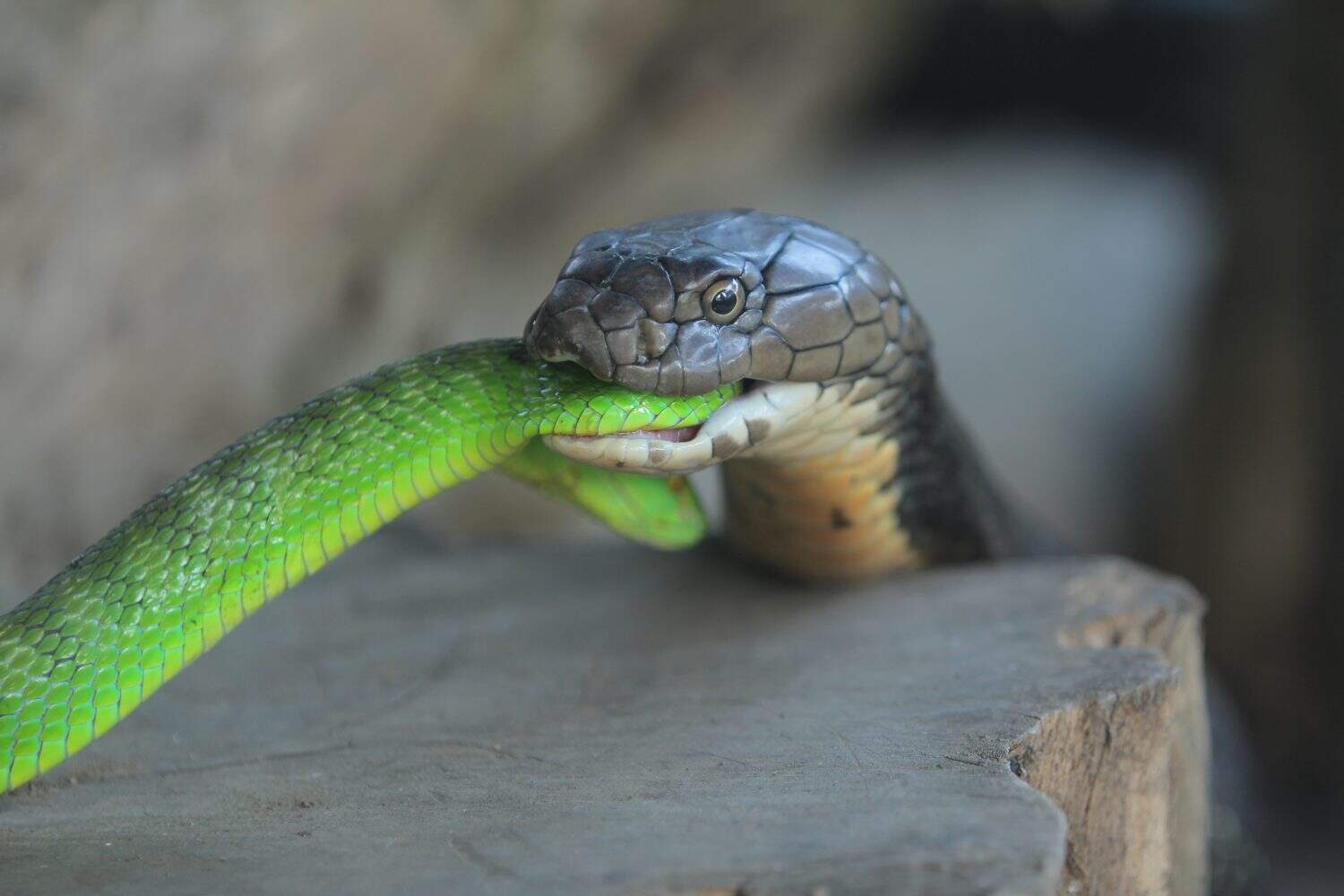
King cobras are the world’s longest venomous snakes, reaching lengths of 10 to 13 feet. Uniquely, they primarily eat other snakes. Their genus name, Ophiophagus, literally means “snake-eater.” King cobras live in the forests, bamboo thickets, and agricultural edges of South and Southeast Asia, including India, Thailand, Malaysia, Indonesia, and southern China.
They hunt by following scent trails with constant tongue flicking, locating prey hidden in dense vegetation, termite mounds, or burrows. Their diet includes rat snakes, pythons, kraits, and even other venomous cobras.
As apex predators in many Asian ecosystems, king cobras consume other snakes and can help regulate their populations, though their own numbers are currently listed as Vulnerable by the IUCN due to habitat loss and human pressures.
Kingsnakes
Kingsnakes are non-venomous constrictor snakes found throughout North and Central America, especially in the United States and Mexico. Most species grow to about 3 to 5 feet long, with some reaching over 6 feet.
These snakes are well-known for preying on other reptiles, including venomous species. Their diet often includes rattlesnakes, copperheads, cottonmouths, and other small snakes.
Many kingsnakes have a natural resistance to the venom of local pit vipers, allowing them to survive bites that would be deadly to other predators. This combination of strength, venom resistance, and opportunistic feeding makes kingsnakes important predators that can help limit the numbers of dangerous snakes in their ecosystems.