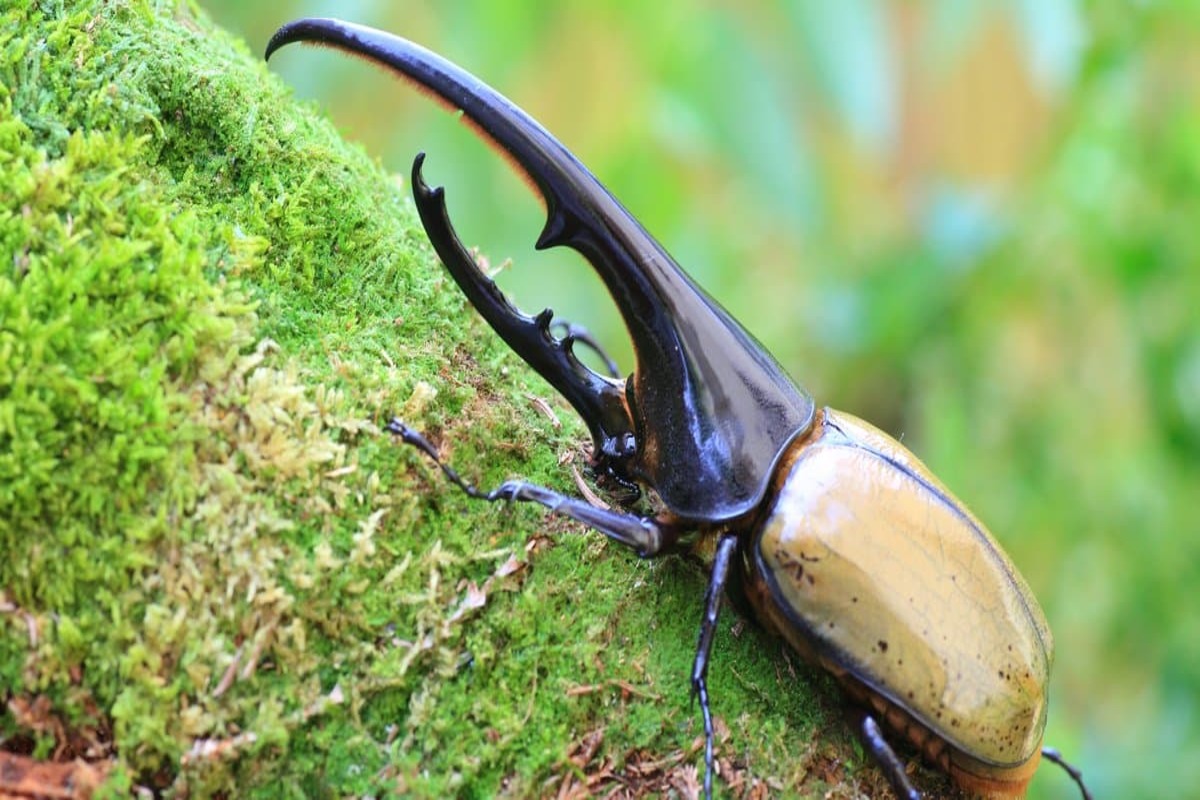
Over 400,000 species of beetles have been identified, and it’s estimated that over a million exist. Among the largest subfamilies of beetles is the Dynastinae, also called the rhinoceros beetle. The largest of the rhinoceros beetles is the Hercules beetle, known for its monstrous size. Today, we’re going to look at the Hercules beetle vs. rhinoceros beetle to see how the Hercules beetle is distinct from the rest of the family.
The 5 Key Differences Between Hercules Beetles and Rhinoceros Beetles
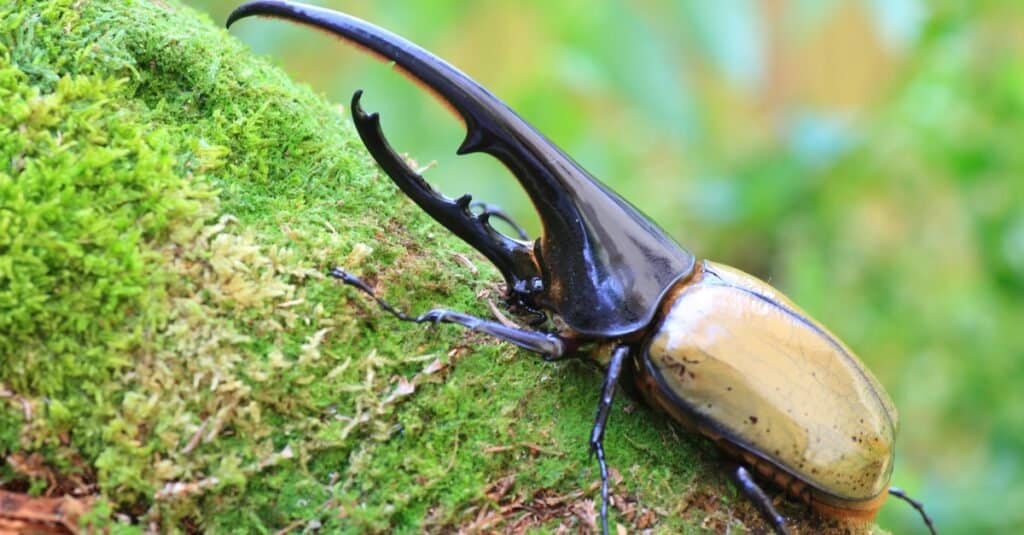
The greatest differences between a Hercules beetle and a rhinoceros beetle can be found in their average size, location, and morphology. Hercules beetles are the largest extant species of beetle, and they grow between 2.4 and three inches long in body length and seven inches overall when you include their massive horn. Rhinoceros beetles, excluding the Hercules beetle, average up to three inches in total length.
Rhinoceros beetles are found on every continent except Antarctica, but Hercules beetles are only found in Central and South America and the nearby islands comprising the West Indies.
Male Hercules beetles have massive, pincer-like horns that they use to battle other males for access to females. While many other rhinoceros beetles have sizable horns, like the Japanese Rhinoceros beetle, none have horns that are as long as the Hercules beetle.
These are some of the most notable differences between the Hercules beetle species and the entire subfamily to which it belongs. However, other unique qualities exist too. We’re going to look a bit closer at five different ways that they’re different.
Hercules Beetle vs. Rhinoceros Beetle: Size
While many rhinoceros beetles are large, the Hercules beetle is the largest of them all. The average Hercules beetle weighs 0.5 to 1.2 ounces and measures between 2.4 and 3 inches, the former for females and the latter for males. However, the males are far longer due to their horn, which measures several inches. The longest Hercules beetles are between six and seven inches long.
Meanwhile, the average Rhinoceros beetle measures between 0.2 and 1.2 ounces and measures from 0.5 inches long to three inches. This measure includes several of the largest beetles and their horns, like the Japanese rhinoceros beetle. However, several variations of body size exist in this subfamily.
Hercules Beetle vs. Rhinoceros Beetle: Morphology
The rhinoceros beetles and Hercules beetles are known for their large horns. However, the Hercules beetle has a horn that can exceed 1/3 of its total body length. This horn-like pincer is only found in males, and it can be quite large.
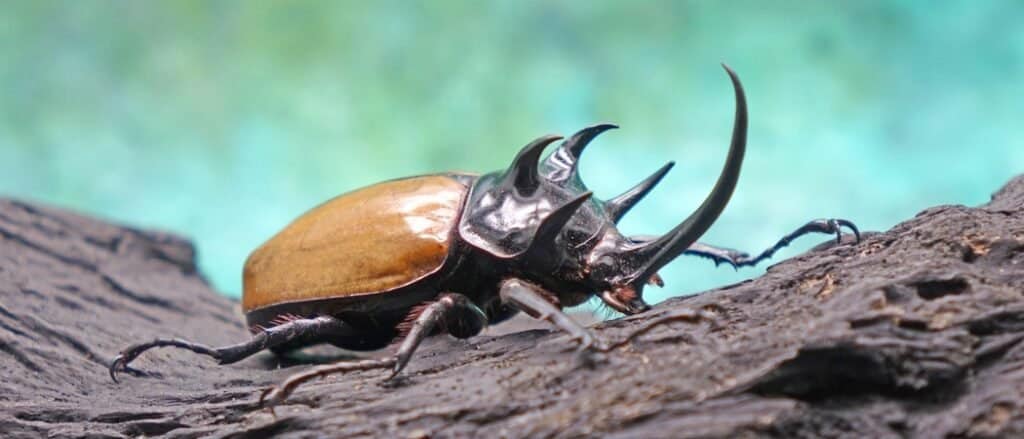
Other male rhinoceros beetles have horns, and not all of them have the elongated overarching curve. Some are smaller and resemble the rhinos for which they’re named. Moreover, the colors of the rhinoceros beetles are common in Hercules beetles, especially black, yellow, and green.
Both types of beetles have hard exoskeletons, chitinous forewings, and membranous hindwings. Still, the Hercules beetle is larger than the others.
Hercules Beetle vs. Rhinoceros Beetle: Diet
The Hercules beetle and most other rhinoceros beetles have a similar diet. They’re herbivores that survive on rotting wood in their long, ravenous larval stage and are fruit-eaters as adults. Due to their variation in range, though, they don’t eat all the same fruits.
Hercules Beetle vs. Rhinoceros Beetle: Species
The Hercules beetle comes from the Dynastinae subfamily, a branch of the Scarabaeidae family. The species name is Dynastes hercules, and roughly ten different subspecies belong to the Dynastes genus. Meanwhile, the Dynastinae subfamily that contains all rhinoceros beetles is home to 1,500 species from 225 genera. To be clear, the Hercules beetle is a rhinoceros beetle.
Hercules Beetle vs. Rhinoceros Beetle: Range and Habitat
Hercules beetles live in Central America and South America, including countries such as Mexico, Bolivia, Brazil, Peru, and Trinidad and Tobago. They can often be found living in rainforests, but they are losing area due to deforestation.
Meanwhile, rhinoceros beetles can be found on every continent except Antarctica. They live in woodlands, grasslands, farmlands, and forests. They often make their homes in rotting wood, especially as larvae. Sometimes, the adult versions of these creatures are kept as pets in parts of Asia.
