Expectant parents who are dog owners often wonder how they should introduce their new baby and dog, and whether they should be concerned about their dog attacking the baby at any point. The good news is that most canines will be fine around infants, after the initial adjustment period, where they are mostly curious about the new tiny being.1 But there are rare incidences of dogs biting babies, so you want to know what signs to look for that would indicate a dog may be about to attack.
Why would a dog attack a baby in the first place? Babies cry loudly and make sudden noises out of nowhere, and if they’re older, babies may wave their hands and feet around erratically. All of this can be scary for a dog. Some dogs with high prey drives may also view the tiny human as “prey.” However, by properly introducing your dog and baby and knowing what signs could indicate a dog is about to attack, your child should be safe.
The 8 Signs a Dog Will Attack a Baby
So, what should you look for to determine whether a dog will attack a baby? Here are seven signs to be aware of.
1.History of Aggression With Children
Unfortunately, if a dog has already shown aggression to children (no matter their age), they’re likely to also show aggression towards a baby. Dogs may be aggressive towards children (and babies) because they’ve never been properly socialized, so they view the tiny humans as frightening. Or a dog may be aggressive with older children due to resource guarding, as children don’t always understand what a dog being territorial means. Even though a baby won’t be taking any of a dog’s resources, the dog may not realize that and be on guard.
So, if your pup has a history of showing even minor signs of aggression towards kids, it could be a good indicator they might be aggressive towards or attack a baby.
2.History of Aggression With Adults
Even if a dog has never shown any indication of being aggressive with children, any history of aggression could be a sign they’ll be aggressive with or attack a baby. Though dogs tend to be aggressive for a reason (usually fear), they may not always need a clear reason to react in an aggressive manner. So, even if your dog has only ever shown occasional signs of aggression with adults, you’ll want to be cautious with them regarding babies.
3.High Prey Drive
Does your dog have a high prey drive and a history of predatory behavior? Have they been known to chase down and kill a squirrel? Have they ever gone after (or killed) a bird or cat? Then that’s a clear indication they may end up attacking a baby. Babies are tiny and wriggly, much like small animals, so they can easily be mistaken for “prey” in canines with high prey drives known to go after creatures smaller than them. This could be a dangerous situation to have a baby in.
4.Infatuation with Squeaky Toys
Lots of dogs love squeaky toys, and that’s not a problem or cause for concern. However, if you have a dog that is obsessed with these sorts of toys, and hell bent on savaging, shaking, and destroying them, there is a chance that they could mistake a squeaking, squalling baby for something that must be savaged and subdued. This sort of behavior often goes hand-in-hand with a high prey drive, but not always. If your dog is hyper focused on toys that squeak, be extra vigilant when they are around your little ones.

5.Growling or Barking
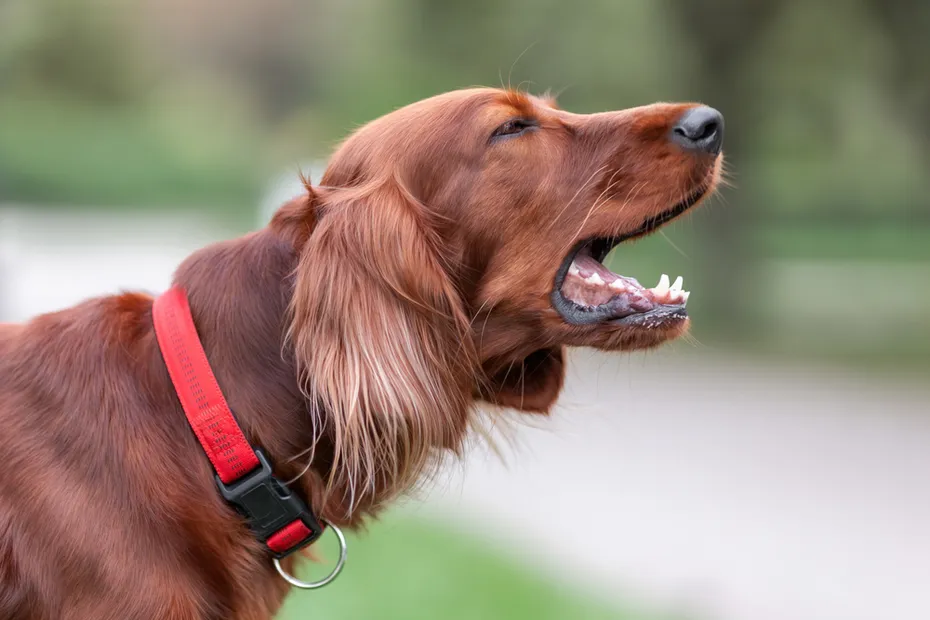
It’s normal for a dog to be nervous or anxious around a baby at first. After all, a baby entering the household may be a new experience, and it means things change. But if a dog is growling around your little one or barking at them, this is a clear sign that the dog is unhappy. Whether they’re afraid, nervous, or even angry, it may not bode well for the baby (or anyone else around). You absolutely want to separate a constantly growling or barking dog from a little one.
6.Rigid Posture
Dogs don’t always growl or bark when they become aggressive. Sometimes a dog may just go completely rigid when agitated (which could be them freezing, like in the “flight, fight, or freeze” response). When a dog does this, they’re on the lookout for anything that could prove dangerous, and if the baby is around and becomes noisy, that could come across as “danger” to the dog.
7.Pacing
If you see your dog pacing near your baby, it could be another sign they’re scared, anxious, nervous, or generally just agitated. A dog pacing is similar to a human nervously pacing back and forth, as moving may feel better than staying still. However, like with the other signs, this one could indicate aggressive behavior is coming, so you want to ensure your baby is far away from your pet if they’re exhibiting this behavior.
8.Tail Wagging
Wait, doesn’t a dog’s tail wagging mean they’re happy or excited? Not always. If your pup’s tail is wagging and their whole body is involved in this wagging motion, it indicates excitement, happiness, or playfulness. However, if your pet is standing still while their tail wags slowly back and forth more slowly, it could indicate agitation and an imminent attack. So, pay close attention when your dog is around your baby to see what kind of tail wagging is going on.